24kWh Extreme 100 75kW 5dr Auto

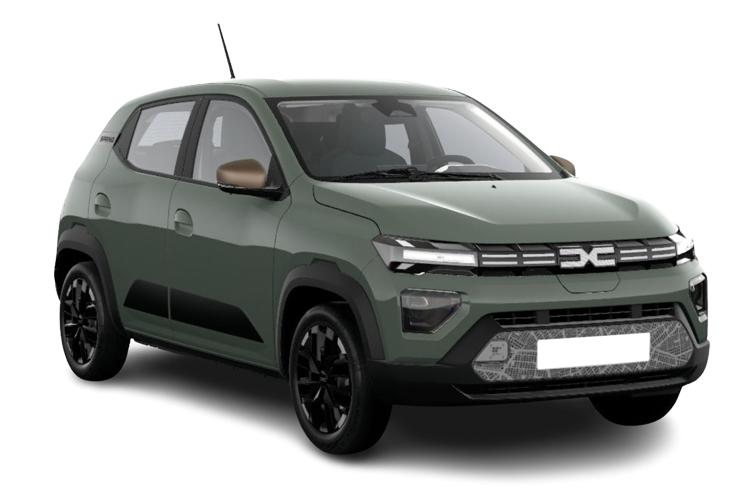


If you ignored the MK1 Dacia Spring EV citycar, take a fresh look at this second generation version, advises Jonathan Crouch.
Dacia is now building more credible cars, not just cheap ones. The original version of the brand's tiny Spring EV citycar was certainly cheap - in fact it was Britain's most affordable new car - but still not many people wanted one. But that might change with this, the second generation version. The first generation Spring was launched in its earliest form back in 2021, an awkward-looking spindly-wheeled little thing. The British importers wisely waited a year until it was facelifted with a few extra safety features added before offering it here. In 2024, the previously feeble electric motor output was boosted and a more robust LFP battery offered, but the car was still rated only at around 140 miles of range. Those updates allowed Dacia to amass 210,000 MK1 model sales, though the Spring remained a relatively rare sight here. But that might change with the introduction of this MK2 model. It's 50% more expensive, but because it's now European-made rather than Chinese-built, a lot of that price increase can be potentially be covered by a government grant. It carries over only its name from its predecessor, with everything you can't see based on the Renault Twingo (and a Nissan model, the Pixo). But it's a more sensible kind of EV citycar than that Renault. Let's take a closer look.
Whenever a car maker starts an engineering brief on a new model with an estimate of how far a typical owner travels in a day, you know that the EV range of the vehicle in question will be somewhat restricted. In the case of the Spring, the daily average according to Dacia is just 13 miles. Which is just as well because the first generation model never managed more than an official 140 mile reading (and in harder real-world driving often struggled to make three figures). If you'd hoped that this second generation model would do significantly better (or at least match the 165 mile figure of its most obvious budget priced rival, the Leapmotor T03) you're going to be disappointed because the Twingo-based 'RGEV Small' platform underpinnings don't allow for a battery very differently sized from the one fitted to the previous generation model. It's an LFP pack with a 27.5kWh capacity (the MK1 Spring used a 24.3kWh pack) and the WLTP-rated range is 155 miles. That's 8 miles less than the Twingo but 16 miles up on the first generation Spring. That original model got a motor upgrade in 2024 and a similar 80bhp output is carried over here, the front axle unit powering the car to 62mph in 12.1s en route to the very modest top speed of 81mph. You can expect the bigger, wider wheels and more planted stance to make this new generation Spring much more stable through the corners. And Dacia has worked on ride and refinement too, to better match the class standard.
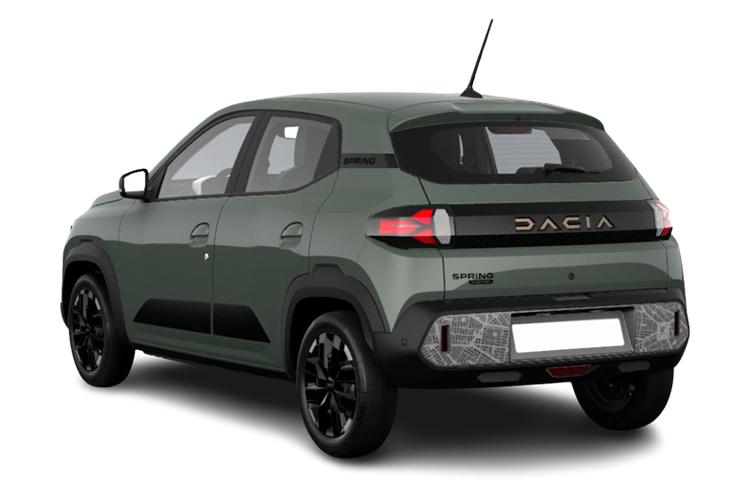
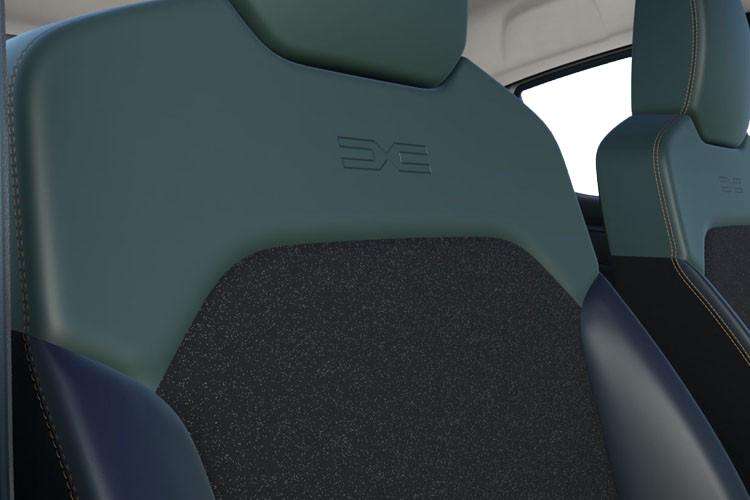
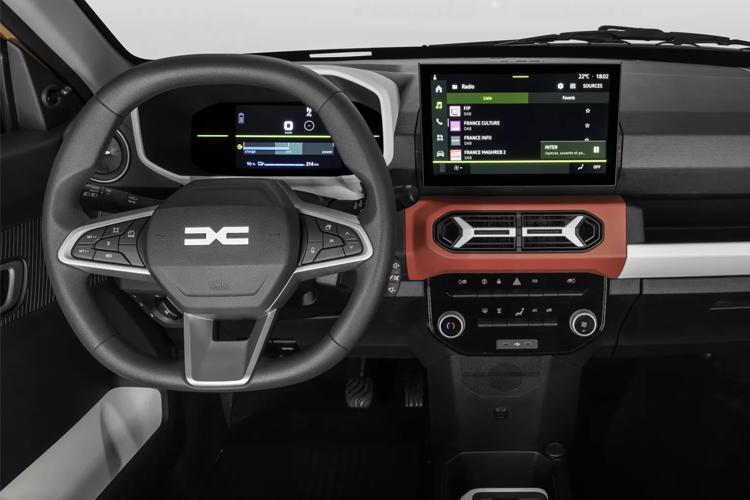
It's not often that a stylist is given the task of diluting an existingly good design but that in essence was Dacia styling chief David Durand's task here. The MK2 Spring had to be created around all the engineering and exterior hard points of the Renault Twingo that's built in Novo Mesto, Slovenia alongside it. Still, that shortened the design process (to a record-breaking 16 months) with a sensibly-shaped end result that at first glance is remarkably different to its Renault cousin. Not in terms of size of course: this MK2 Spring is 3,850mm long, 1,740mm wide and 1,490mm tall, so it's quite a lot bigger than its predecessor (150mm longer and 180mm wider) and the tough, balanced stance is very different from the narrow, small-wheeled rather awkward look of the first generation car. The chunky shape is an intentionally more sober interpretation of what a small EV citycar should be, with a front end that looks rather 'Vauxhall' and a textured black panel connecting the lights at both ends that's designed to reduce scratches. Above prominent impact-absorbing black bumpers. The Twingo ancestry is much more noticeable inside, disguised by duller trimming and a Dacia steering wheel. All models get a 7-inch driver's instrument display, but you only get a central screen (10.1-inches in size) with top 'Journey' trim. On other variants, your smart 'phone is supposed to act as the central monitor, via a provided mount and a downloadable app. This is probably the most practical cabin in the citycar segment - or it can at least be configured to be. The tray between the seats can be accessorised with flip-top cubbies, a big centre console or a neat armrest with zip-up storage. There's also a shelf on the dashboard - and another for your 'phone, though it looks lacks a wireless charging mat. The rear seats are reasonably spacious given the Spring's diminutive size and benefit from the tall roof line. But they unfortunately lack the sliding seat base you can have in the Twingo. The pop-out (rather than wind-up) rear windows though, will be annoying on humid days. Something this Dacia gains over its Renault counterpart though, is a useful false boot floor with two opening halves. There's 337-litres of space - impressive for a car of this class, as is the 1,278-litre total with the backrest folded. There's a further (but sadly optional) 17-litre space beneath the bonnet for the charging leads.
Expect pricing starting from under £18,000. A lot will hang on whether the Spring will qualify for the highest £3,750 level of government Electric car Grant (now available to Dacia because this model's now European-built). Even if it does, it's still going to be a couple of thousand more than the deal-adjusted price of its closest rival, the Leapmotor T03. Dacia expects a lot of British buyers to want top 'Journey' trim, which includes larger 16 inch wheels, keyless entry, rear view camera and a central template 1 inch instrument screen with built-in navigation. As well as wireless Apple car plane android auto. There's also full online support for maps and access to remote services like cabin pre-warming and charge management. With lesser trim levels, a smart phone mount replaces the centre screen. Safety kit is much as it was on the previous generation model, which means you get the basics - lane-keeping assistance, advanced emergency braking and driver attention monitoring. As you'd expect, there are also front airbags, plus full-length curtain airbags, and ISOFIX points are provided for the outer rear seats. Dacia questions whether customers in the segment really want as much drive assistance kit as is being offered these days. The brand reckons the most used button in its cars is the so-called 'magic button' which allows owners to switch off all the beeps. You don't get much choice about body colour and to start with there aren't any particularly bright shades available: just an 'Agave' blue offered alongside the silver, black and white shades.
Dacia claims that it simply isn't necessary to have a three-figure DC charging speed on a car with a battery this small, but even so, you might be surprised to find the DC figure here as low as 50kW. Dacia calls this 'fast charging' (incredibly the 50kW speed is optional in some European market versions of this car) but a 15 to 80% charge in 20 minutes may well satisfy most customers. It's worth pointing out the low segment standard in this regard, a rival BYD Dolphin Surf capped at 65kW and a Leapmotor T03 at 75kW. At home, connected to a single-phase 7.4kW AC wallbox, you'll need 4 hours 15 minutes for a 10-100% charge; or 2 hours 35 minutes if you're able to use a three-phase 11kW AC wallbox. On to the warranty. Dacia offers an industry standard 3-year/60,000 miles guarantee from the showroom, backed by three years or 60,000 miles of roadside assistance. For a little more, you can extend the cover by two years or you can up the period covered to a Kia-equalling 7 years and 100,000 miles. Service intervals are every year or every 12,000 miles and since most Renault dealers look after Dacias too, you shouldn't be too far from a specialist workshop. Dacia offers a choice of pre-paid servicing schemes covering you for either two years and 24,000 miles or three years and 36,000 miles.
The first generation Spring didn't always sell as strongly as it should have done, especially in our market. And when it did sell, it was almost always only because it was so cheap. The second generation model has lost its predecessor's extreme affordability, but is vastly improved in every other regard. If you need an affordable EV citycar and can't see the point of the extrovert, funky Renault Twingo this Spring is now based upon, then this Dacia could well be for you. Drive range is still pretty limited - right on the edge of what is now acceptable in a small EV. But there are no longer compromises in most of the areas of design that matter almost as much to a potential customer. You might buy one of these just because you wanted it. And for Dacia, that's a big step forward.
Ultra Rapid(150kW)
Rapid(100kW)
Fast(50kW)
Home(7kW)
Disclaimer: Charging speeds are estimates and are based on assumptions so should only be used for general comparative purposes. Actual charging rates and speeds depend on vehicle charging ability, ’useable’ battery, energy loss and current state of charge.
HMRC consider Company Cars that are used for personal journeys as a non cash benefit. Therefore, should your employer provide you with a car which you use for personal journeys, or you opt into a salary sacrifice scheme, you will pay Company Car Tax, often referred to as Benefit-in-Kind (BIK). The taxable benefit-in-kind is determined as a percentage of the car's UK list price (P11D), with the percentage varying based on the car's CO2 emissions measured in grams per kilometre (g/km).
| Tax Year | BIK | Monthly Cost for 20% Taxpayer | Monthly Cost for 40% Taxpayer |
|---|---|---|---|
| 2026/27 | 4% | £11.28 | £22.57 |
| 2027/28 | 5% | £14.10 | £28.21 |
| 2028/29 | 7% | £19.75 | £39.49 |
| 2029/30 | 9% | £25.39 | £50.78 |
+ initial rental
Processing Fee: £ inc VAT
87kW Icon 42kWh 3dr Auto
£376.74 inc VAT
Initial rental: £1,130.22 inc VAT
£322.61 + VAT
Initial rental: £1,935.63 + VAT

157kW Design 73kWh 5dr Auto
£590.98 inc VAT
Initial rental: £1,772.93 inc VAT
£463.95 + VAT
Initial rental: £2,783.71 + VAT
130kW Boost 51kWh 5dr Auto
£403.20 inc VAT
Initial rental: £1,209.60 inc VAT
£334.95 + VAT
Initial rental: £2,009.71 + VAT