200kW 100kWh Rear Motor Business 5dr Auto

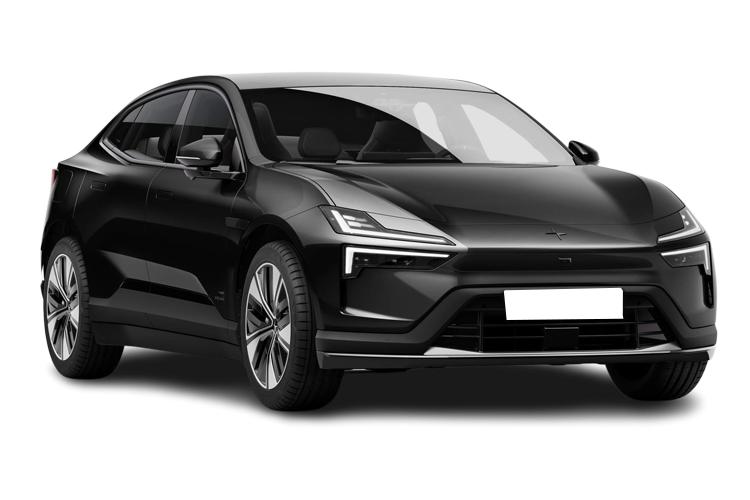


The Polestar 4 SUV widens the appeal of the brand's best-seller. Jonathan Crouch takes a look.
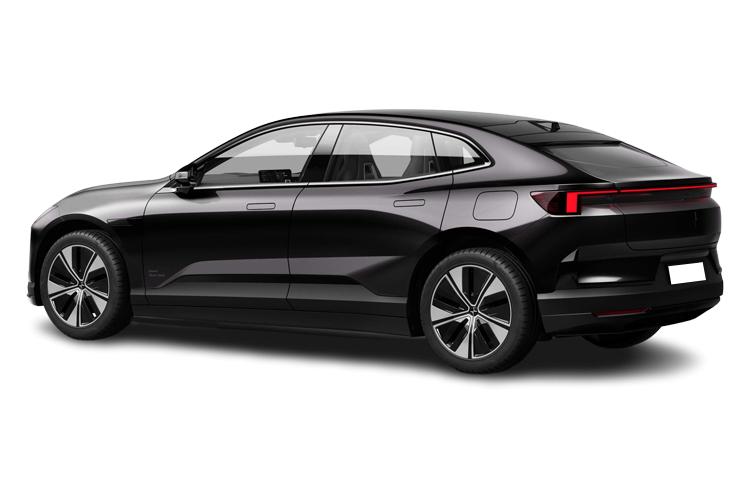
Britain likes the Polestar brand. And, more specifically, we like the company's Polestar 4 mid-sized EV crossover. Which, since its launch in late 2023, has played a major part in making ours the Sino-Swedish marque's biggest export market. Now though, the '4' comes in two flavours and we're here to look at the added SUV version. The most unique and headline-grabbing aspect of the original Polestar 4 (which continues, now known as the Polestar 4 Coupe) was its lack of a rear window, a feature reinstated for the SUV version. That of course, in concert with a taller squarer shape, means a bigger boot and a more conventional look. Otherwise though, very little is different over the existing Polestar 4 design, though a few different elements of it have been slightly updated to coincide with this second variant's arrival. With increasing segment competition, it's a model line that's needed wider appeal. So let's take a closer look at the Polestar 4 SUV.
This SUV model features only subtle engineering changes over its Coupe counterpart. 'Small calibration tweaks' have been made to the Sustainable Experience Architecture. And, thanks to new Hankook tyres and subtle battery optimisation, the SUV model can go six miles further than the Coupe - 391 miles for the rear motor model and 373 miles for the dual motor version. Otherwise, everything's as with the Polestar 4 Coupe, which means there's a substantial 102kWh battery for all versions. In the Single motor variant, this is mated to a rear-mounted 268bhp motor, which makes 62mph in 7.1s. The Dual motor AWD derivative has 536bhp and improves the sprint figure to 3.8s. As with the 4 Coupe, there's also a 'Performance Pack' version of the Dual motor derivative, which gets updated brakes, wheels and tyres as well as tweaks to the steel suspension. The passive dampers of the Single motor model are exchanged for 'semi-active' dampers in the Dual motor version; and, unlike on the 'Performance' version of the Polestar 2, you don't have to adjust those with a spanner but can do so via the centre dash screen. The '4' has been engineered for as much self-driving tech as individual market laws will currently allow. LiDAR sensors (and a bank of radars and cameras) on the car create a 3D map of its surroundings in real time, allowing this Polestar to see up 600 metres away - or up to 7.5s ahead of the vehicle at highway speeds, allowing 'centimetre level' precision that enables the '4' to map the environment and traffic conditions around it. The result is the capability for completely autonomous highway driving (without the driver having to pay attention) and 'eyes-on' autonomous driving on other roads.
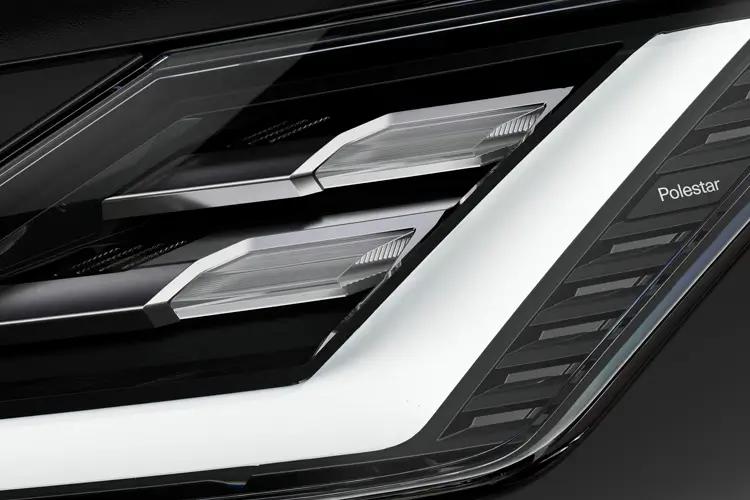
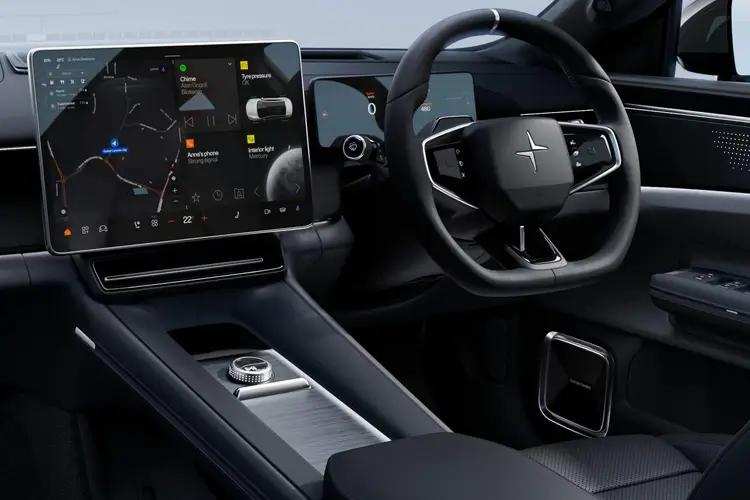
It's hard to think of a model derivative that looks less like the design it's based on than the Polestar 4 SUV. Which is amazing given that the brand says the SUV requires just 48 new parts. There's almost an estate-like look to this more practical version's upright rear end, which features the conventional rear window the Coupe variant has to do without. Both body shapes measure 4,840mm in length and 2,139mm in width, but the SUV sits 22mm taller, some of that due to standard-fit roof rails supposed to be able to take loads of up to 100kg. As with the Coupe, there are dual-blade LED headlights and an illuminated logo at the front. The Coupe's full-width rear light bar also features on the SUV. Up-front inside, the landscape-orientated Android Automotive 15.4-inch central display gains improvements, with more short-cut buttons (nine, compared to the previous six) and there's now Google Gemini integration too. As in the Coupe, the centre monitor is complemented by a 10.2-inch digital driver's instrument display and a 14.7-inch head-up display (which in a typically Swedish touch displays in yellow when it's snowing). Other cabin updates fresh to the '4' include subtly illuminated indicator stalks and an illuminated star on the roof that reflects onto the standard panoramic glass top. There's also even more sustainable 'Star Knit' trimming with 'bio-attributed' MicroTech fabric and an optional '3D knitted' upholstery package that re-uses 89% PET waste. And there's a bespoke 12-speaker 1,400-watt Harmon Kardon premium audio system. Rear seat space is much as in the Coupe, but with the SUV there's now a parcel shelf behind the passengers' heads, which benefit from 25mm more ceiling space. Unique to the SUV is an electrically-dimmable feature for the glass top. Out back, the SUV offers a 530-litre boot (30-litres more than the Coupe) - or 655-litres when loaded to the roof. Polestar hopes this and the boxy shape will make this 4 more attractive to dog owners. The seats-folded total is 1,665-litres (129-litres more than the Coupe).
Prices for this Polestar 4 SUV start at £54,750 for the Single Motor version (£2,000 less than the equivalent Coupe model); it's £60,750 for the Dual Motor 4 SUV (£3,000 less than the equivalent Coupe model). Equipment differences over the Coupe include unique alloy wheel designs up to 22-inches in size. And some different panelwork colour choices, including 'Ozone' (a light purple) and 'Aurora' (which is a kind of silver-green). Also a little different with this SUV version is the improved radar set-up. The Coupe relies on 12 cameras and just one radar, but the SUV has a better five-camera, five-radar set-up, which apparently works better in bad or dirty weather. Newly introduced to the '4' is V2L technology which allows owners to power electrical devices from the car's high-voltage battery. This works with an added 'camping mode', which brings access to various interior functions for extended periods. As on the Coupe, standard equipment also includes Polestar's 'Plus Pack', which includes comfort and technology features. An extra cost, a Nappa upgrade can be specified in addition to the 'Plus Pack' and includes animal welfare-secured Nappa leather upholstery with ventilation and massage, along with additional head rest speakers for the front seats and rear comfort headrests. You might also want to spend more on an optional 'Pro Pack', which adds 21-inch wheels and subtle design details.
We gave you the EV driving range figures in our 'Driving' section - 391 miles for the Single motor version and 373 miles for the Dual motor variant. A heat pump is standard allowing you to maintain range in really cold temperatures. Charging takes place via a fancy motorised charging door. All '4' models can DC charge at up to 200kW, which allows them to top up using rapid public charger from 10 to 80% in half an hour. There's 22kW AC home charging capability, which from empty to full requires 5 and a half hours on a 3-phase 22kW wallbox - or 11 hours with an 11kW AC wallbox. If you've a more typical 7.4kW wallbox, you'll need almost 14 hours. Bi-directional charging will also be offered, which will allow you to power other electrical items from the vehicle. Polestar is very hot on assessing the carbon footprint of its cars and the '4' is supposed to have the smallest carbon footprint of any of the brand's models. Tested by the company's life cycle assessment process, the Single motor version was found to produce 21 tonnes of CO2 over its lifetime, over 200,000kms of use. With the Dual motor version, that figure rises to 23 tonnes of CO2. To give you some comparison perspective, a petrol-powered Volvo XC40 will emit 58 tonnes of CO2 over its life cycle.
The way we perceive the Polestar 4 is going to change now to something much more conventional because the brand reckons that going forward, over 70% of '4' customers are going to choose this less controversially-styled SUV version. You can see why: it's cheaper, more spacious and more practical to own. And if, like us, you think that in becoming so, it's also become just that little bit less special, the original Coupe version is still there for you to consider, rear window-less and all. A lot has changed in the segment since the original model was launched and some similarly shaped and priced premium mid-sized EV crossover rivals have started to significantly surpass this Polestar in terms of driving range and charging speed. But if those issues aren't deal-breakers for you, then the Polestar 4 might still represent a tempting class alternative, particularly in this more versatile SUV form.
Ultra Rapid(150kW)
Rapid(100kW)
Fast(50kW)
Home(7kW)
Disclaimer: Charging speeds are estimates and are based on assumptions so should only be used for general comparative purposes. Actual charging rates and speeds depend on vehicle charging ability, ’useable’ battery, energy loss and current state of charge.
HMRC consider Company Cars that are used for personal journeys as a non cash benefit. Therefore, should your employer provide you with a car which you use for personal journeys, or you opt into a salary sacrifice scheme, you will pay Company Car Tax, often referred to as Benefit-in-Kind (BIK). The taxable benefit-in-kind is determined as a percentage of the car's UK list price (P11D), with the percentage varying based on the car's CO2 emissions measured in grams per kilometre (g/km).
| Tax Year | BIK | Monthly Cost for 20% Taxpayer | Monthly Cost for 40% Taxpayer |
|---|---|---|---|
| 2026/27 | 4% | £36.46 | £72.91 |
| 2027/28 | 5% | £45.57 | £91.14 |
| 2028/29 | 7% | £63.80 | £127.60 |
| 2029/30 | 9% | £82.03 | £164.06 |
+ initial rental
Processing Fee: £ inc VAT
150kW 60 SE L 63kWh 5dr Auto
£455.90 inc VAT
Initial rental: £1,367.71 inc VAT
£379.92 + VAT
Initial rental: £1,139.76 + VAT

155kW Knight 61kWh 5dr Auto
£387.59 inc VAT
Initial rental: £2,325.54 inc VAT
£339.39 + VAT
Initial rental: £2,036.35 + VAT
P6 275kW 83kWh Plus 5dr Auto
£807.23 inc VAT
Initial rental: £2,421.68 inc VAT
£685.88 + VAT
Initial rental: £4,115.25 + VAT