110kW Iconic Five Comfort Range 52kWh 5dr Auto



Renault's 5 E-Tech Electric aims to redefine what a trendy tiny EV can be. Jonathan Crouch drives it.
The future of Renault starts here. Well actually, it started back in 2021 when freshly installed company CEO Luca de Meo took one look at the retro '5 E-Tech' concept car his designers had just sketched and said "build that". It's taken some time for that to happen and in the interim, this new-era Renault 5 has become the poster child for de Meo's so-called 'Renaultution' plan to transform the company with a very different range of EV-led models. It's only electric - designed to replace the ZOE - and sits on the company's dedicated 'AmpR Small' platform, which will also be used for forthcoming Renault 4 and Twingo models as well as the new-era Nissan Micra. Associated performance brand Alpine sells a hot hatch spin-off, the A290. Like all of these models, the 5 celebrates its smallness - and aims to replicate the ongoing market success of other modernised retro small EV designs, like the MINI Cooper Electric and the Fiat 500e. As with those cars, lots of advanced technology lies behind the nostalgic Seventies design cues. Renault announced a few small updates to this model in Autumn 2026 to create the car we're going to look at here.
You expect nimble, agile handling from a small car that looks like this and Renault says that there are two design keys here that provide it. Obviously important for agility are the measures that have kept kerb weight to under a tonne and a half; that's unusual for an EV. Unusual for a small hatch of any kind is the replacement of the normal torsion beam suspension set-up for a more sophisticated rear multi-link arrangement. That not only makes the ride more supple but also offers extra stability in extreme manoeuvres, like avoiding a child running out into the road. The main thing that the original version of this model needed to improve a little was EV driving range, so Renault's given some thought to that. As before, there are two powertrains available, starting with the 40kWh Urban Range version with 120hp. EV mileage for this variant has been increased from 190 to 197 miles. Most 5 E-Tech customers though, choose the Comfort Range 52kWh 150hp drivetrain. Here again, range has increased slightly - from 248 to 259 miles. Of possibly more impact on EV mileage though, is the new SmartMode system you now get on all models that automatically switches between the car's Eco, Comfort and Sport drive modes, according to how it's being driven. That means it can call on the sharper responses of Sport mode when the driver accelerates for an overtake, for example, before moving back to Eco when the pace drops through a town or village. Drivers who prefer to make the choice themselves can still change modes through the OpenR Link touchscreen or by voice command. With SmartMode taking care of more of the work automatically, the dedicated Multi-Sense button has been removed from the steering wheel. Performance hasn't changed. The 52kWh version gets to 62mph in 7.9s but runs out of steam at 93mph. If you want to go faster in a 5, remember that there's always the Alpine A290 version of this design, which can offer up to 217bhp. Drive dynamics for the standard 5 are based on those of Renault's Megane E-Tech, though the steering isn't quite as sharp and darty as it is in that car, the ratio slackened from 12:1 to 13:7. A brake-by-wire system features as standard.
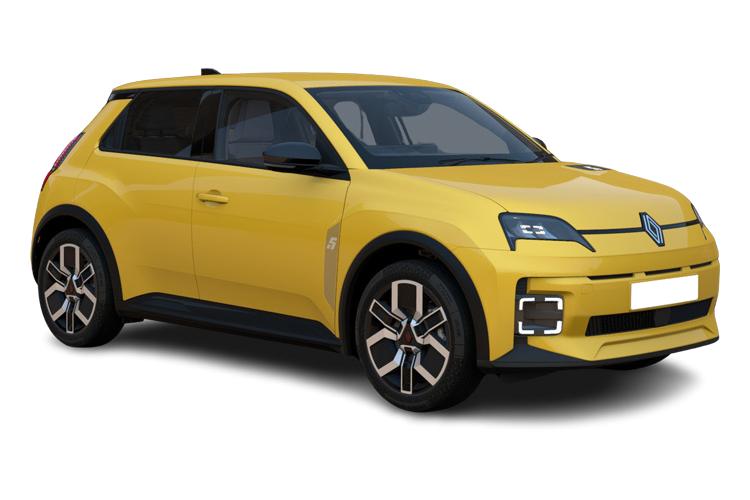
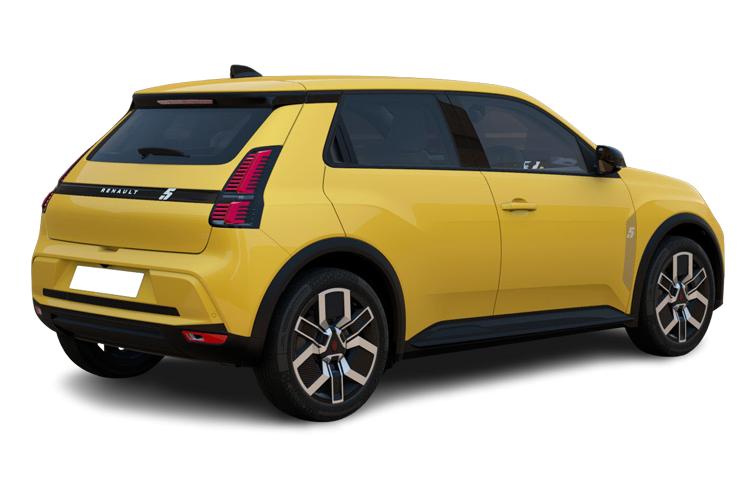
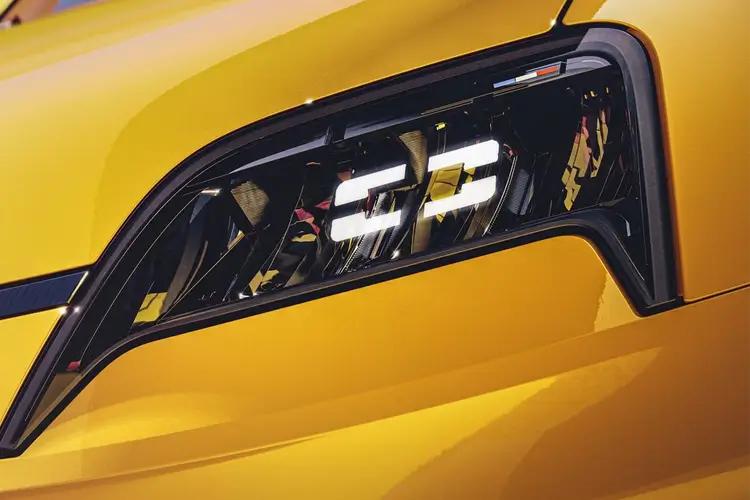
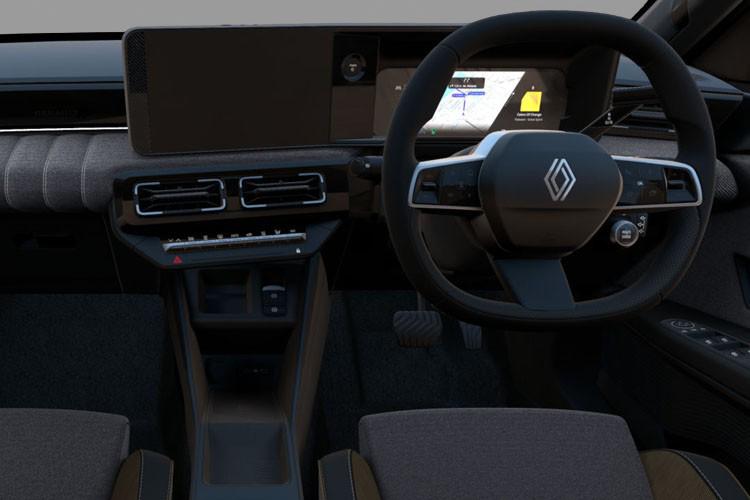
It's ironic that the young, trendy fashionistas being targeted here are the people least likely to remember the Seventies Renault 5 this car references so extensively. Superminis were much smaller in those days and the 5 E-Tech is also extremely compact - by small EV hatch standards anyway, measuring just 3.92m long; which is a small size down from something like a Vauxhall Corsa Electric. Think more Fiat 500e. Like that Italian rival, there's delicious nostalgia dripping from almost every part of this Gallic tiddler's bodywork. It's not just the familiar shape that your dad will recognise. The original 5 had only three doors, hence the way that the rear handles here are hidden in the C-pillars to reference that. There are nods to the classic 5 Turbo hot hatch too - like the rear spoiler; and an offset hump on the bonnet which here incorporates the battery charging indicator, but references the asymmetric cooling vent on the original fast 5. There are modern trendy touches too - notably the headlights, one of the few things changed over the original 2021 motor show concept version of this model. These LEDs reference Manga comic characters and illuminate with a small square when the main beam isn't in use; like a human eye pupil which 'winks' at you when you approach the car with a key fob. The wheel rims are large 18-inchers and at the back, the concept model's full-width light bar is replaced by a black plastic panel that aims to emphasise the 3.77m width. The cabin also sets out to combine real-world technology with retro design. The main Seventies reference lies with the padded stitched passenger-side dashboard moulding, which can be trimmed in several distinctive sustainable textiles, according to the trim level chosen. Over 18% of the car's material content is recycled and you can have denim trimming made from reclaimed PET plastic bottles. Analogue instrument gauges like the original would have been an interesting nostalgic touch, but instead there's the now-expected binnacle screen, offered in either 7 or 10-inch sizes, depending on trim. All variants pair this display with a Google OS-based 10-inch central infotainment screen, which features a ChatGPT-enabled voice-control virtual assistant named 'RENO'. This is there to help you get the most out of your 5, not only responding to questions (like how to pair your 'phone or how to change a tyre for example) but also politely nagging you with supposedly helpful suggestions. So for instance in a traffic jam, RENO will suggest you switch to the 'Eco' drive mode for greater frugality. If you've the windows open with the air con on, RENO will suggest you turn it off. Irritating or intuitive? Only you can decide. As part of the most recent model update, the centre screen can also feature Google's Gemini AI assistant, available through an optional over-the-air update to Google Assistant. Rather than relying on rigid voice commands, Gemini lets occupants speak more naturally and hold an interactive conversation, including interrupting an answer or switching languages midway through. It brings a more conversational layer to the built-in Google technology already at the heart of Renault 5's OpenR Link system. The seats offer a bright range of coloured fabrics and can feature thick corduroy-style padded inserts. The climate controls are thankfully of the physical variety. And, weirdly, you can customise drive shift stalk with a range of clip-on attachments that look a bit like lipsticks. There's even an optional baguette holder that clips onto the centre console. In a car this short, you wouldn't expect much rear seat room, but it helps that the 2.54m wheelbase takes up most of the body length. A couple of adults will be fine for short-to-medium-length journeys. Out back, the 326-litre boot is bigger than you might expect, though that's 60-litres less than you get in a Clio supermini.
The 5 E-Tech qualifies for the Electric Car Grant - at the £1,500 level with the base 40kWh 'urban range' battery and at the higher £3,750 level with the larger 52kWh 'comfort range' battery. Which means that grant-deducted prices start from around £21,500 for the 40kWh model and around £25,000 for the 52kWh version. The entry-level 40kWh model with its 120hp motor comes only in base 'evolution' spec. The 52kWh version with the gutsier 150hp motor is offered with two main trim options - 'techno+' and 'iconic five+'; there's also a top 'roland garros+' version with this uprated drivetrain. Standard equipment across the range includes LED headlights, 18-inch alloy wheels, wireless 'Android Auto' and 'Apple CarPlay' and keyless entry and start. Higher-spec 'techno+' models come with a 10-inch instrument display, Google integration for the infotainment system, wireless smartphone charging and a reversing camera. The plusher 'iconic five+' adds heat for the seats and steering wheel, plus all-round parking sensors and 'chrono' diamond-cut 18-inch wheels. A new magnetic, cooled wireless smartphone charger has been introduced, using the Qi2 standard provides more effective charging and helps prevent overheating, restoring up to 50% of a compatible phone's battery in an hour. One nice standard touch across the range is the bonnet battery indicator, which has the number 5 split into backlit sections that show off your battery percentage. Across the line-up, there are now new colour shades - and fresh optional sticker packs for greater potential personalisation. You get a wide range of different upholstery options too, which use sustainably-sourced materials. The 18-inch wheels come in differing styles.
There are two ways to get acceptable range from an EV these days. One of them - sticking in a huge battery - simply isn't feasible with a car this small, so Renault's gone all out with the other option in this regard - light weight. They developed a bespoke motor that cuts 15kg in mass and 3cm in length. Which is energised by nickel-manganese-cobalt batteries that use a simplified layout in which cells are batched into larger square shapes. That cuts weight - a lot. The base 40kWh pack (using 3 modules with 31 cells apiece) weighs 240kg. The 52kWh pack (using 4 groups of 46 cells) weighs 300kg. As a result, a base 40kWh 5 E-Tech has a kerb weight of just 1,372kg - which is feather-light for an EV. The 52kWh model's 1,449kg weight is about the same as the heaviest version of the brand's combustion Captur small crossover model. To give you some perspective, the original Renault ZOE small EV had a battery of just 22kWh in size, yet weighed in at 1,468kg. Obviously, all this has a huge impact on range figures - 197 miles for the 40kWh model and 259 miles for the 52kWh version. Aerodynamics affect these range figures too of course. Renault says the rear spoiler nets 5 miles of extra range; the 'Techno' trim's clear-faced alloy wheels net another 5 miles. And the slatted rear light design is good for another 2 miles. Remember that charging speeds vary here with battery choice; for the 40kWh model, it's 80kW. For the 52kWh version, it's 100kW. In both cases, expect a 15 to 80% top-up to take just under half an hour from a public DC charger. The AC charging time for full replenishment is 5 hours 30 minutes. You can take an hour off that if you're able to three-phase charge at 11kW. The brand is also offering 'Vehicle-to-Grid' (V2G) compatibility, so that electricity from the car's battery can be intelligently fed back into your home - or even back into the national grid (though you'll need a special 'Mobilize' wall box terminal and a bespoke electricity contract do that). This 5's charging point can also be used to supply up to 11kW of energy to external devices - like, say, a lap top or a camping light. A heat pump is standard, helping to maximise range in particularly cold weather. And the E-Tech system uses Google Maps to automatically begin pre-conditioning the battery when the car is nearing charging points selected in the app. That will mean the battery is then at a perfect temperature on arrival, which will allow you to charge it faster and more efficiently. The Google-based journey planner built into the system can even consider wind direction and speed to predict energy consumption.
The 5 E-Tech doesn't have to be Renault's core B-segment model, which frees it up to be innovative and rather unique. The look has a design longevity that the French maker thinks could last decades, much like the Fiat 500 or the MINI. While the styling of its Clio showroom stablemate must continually change with the times, the 'cinq' doesn't necessarily have to. Whether it will 'democratise electric technology in Europe' as its maker hopes is debatable; Groupe Renault's far more affordable Dacia Spring EV is more likely to do that. But the 5 will play its part in encouraging a wider cross-section of customers to switch to EV. It's cute, it's different and it's the future - with a bit of the past thrown in.
Ultra Rapid(150kW)
Rapid(100kW)
Fast(50kW)
Home(7kW)
Disclaimer: Charging speeds are estimates and are based on assumptions so should only be used for general comparative purposes. Actual charging rates and speeds depend on vehicle charging ability, ’useable’ battery, energy loss and current state of charge.
HMRC consider Company Cars that are used for personal journeys as a non cash benefit. Therefore, should your employer provide you with a car which you use for personal journeys, or you opt into a salary sacrifice scheme, you will pay Company Car Tax, often referred to as Benefit-in-Kind (BIK). The taxable benefit-in-kind is determined as a percentage of the car's UK list price (P11D), with the percentage varying based on the car's CO2 emissions measured in grams per kilometre (g/km).
| Tax Year | BIK | Monthly Cost for 20% Taxpayer | Monthly Cost for 40% Taxpayer |
|---|---|---|---|
| 2026/27 | 4% | £19.42 | £38.84 |
| 2027/28 | 5% | £24.28 | £48.55 |
| 2028/29 | 7% | £33.99 | £67.97 |
| 2029/30 | 9% | £43.70 | £87.39 |
+ initial rental
Processing Fee: £ inc VAT
170kW e-Boost V1 59kWh 5dr Auto
£422.75 inc VAT
Initial rental: £1,268.24 inc VAT
£352.29 + VAT
Initial rental: £1,056.87 + VAT

110kW Evolution 52kWh Comfort range 5dr Auto
£393.28 inc VAT
Initial rental: £1,179.84 inc VAT
£349.73 + VAT
Initial rental: £1,049.19 + VAT
115kW e-Longitude 54kWh 5dr Auto
£578.51 inc VAT
Initial rental: £1,735.53 inc VAT
£504.09 + VAT
Initial rental: £1,512.27 + VAT