


In late July, HMRC released their annual report on taxable benefits in kind for company cars. The report reveals that nearly a third (29%) of company car drivers now use zero-emission electric vehicles, a stark contrast to seven years ago when the majority (80%) drove diesel-powered vehicles.
According to HMRC's latest data, the number of company car drivers has increased for the first time in six years, with 760,000 individuals paying benefit in kind tax on company cars for the tax year 2022/23, up from 720,000 the previous year.
Financial incentives such as lower Benefit-in-Kind rates, Tax Relief and EV Salary Sacrifice Schemes play a crucial role in this shift, with EVs offering signifcant saings for both Company Car drivers and businesses who introduce EVs into their fleet.
Benefit-in-Kind
The most notable savings for drivers come from choosing a zero-emission EV, which benefits from a remarkably low benefit in kind rate of just 2%. Whereas vehicles that produce emissions, have BIK rates ranging from 5% to 37%, meaning having a company car, can be an expensive benefit for an employee.
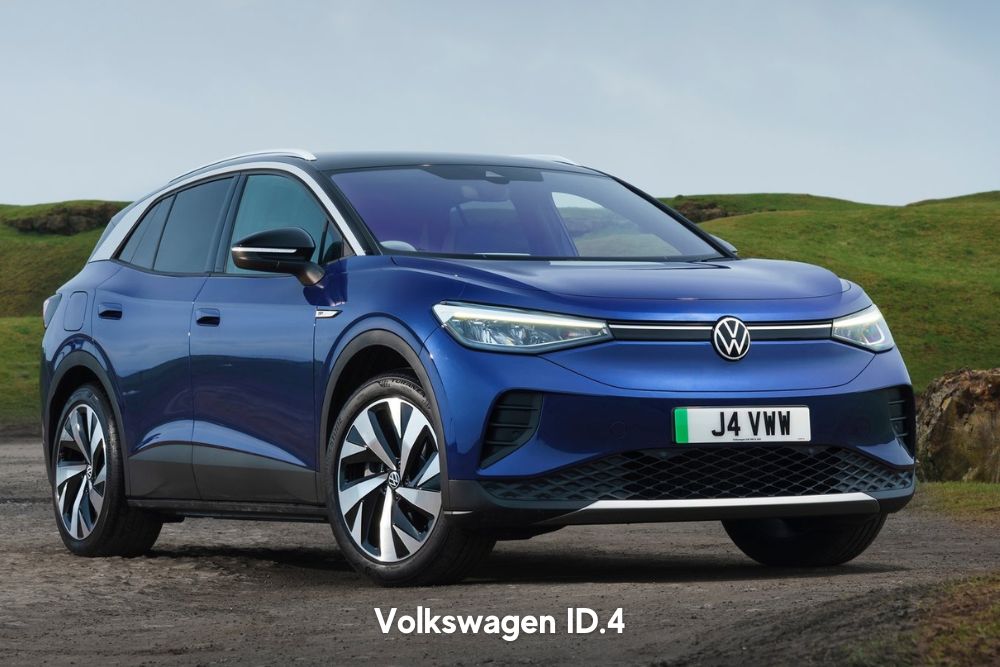
This comparison includes the Volkswagen ID.4, a fully electric SUV and the similarly sized Volkswagen T-Roc, which comes with either petrol or diesel engines.

|
VW ID.4 Match 77kWh Pro 286PS 1-speed automatic 5 Door | Electric |
VW T-Roc Style 1.0 TSI 115PS 6-speed Manual 5 Door | Petrol |
VW T-Roc Style 2.0 TDI 4Motion 150PS 7-speed DSG 5 Door | Diesel |
|
| P11D | £44,305 | £30,945 | £38,125 |
| CO2 emissions g/km | 0 | 130g/km | 146g/km |
| BIK Rate (2022-2025) | 2% | 31% | 35% |
| Monthly BIK 20% Tax Payer | £14.77 | £159.88 | £222.92 |
| Monthly BIK 40% Tax Payer | £29.54 | £319.77 | £445.84 |
Whilst BIK rates are scheduled to increase on EVs, by 1% a year until 2028, they are currently capped at 5% for the 2027-2028 tax year. Therefore, remaining signficantly lower than the rates for vehicles higher CO2 emissions.
View our Volkswagen ID.4 Leasing Deals
Tax Relief
Businesses introducing EVs into their fleet, can benefit from different types of tax relief available:
- Lease Rental Restriction - for vehicles that are acquired via a lease or contract hire
- Capital Allowance - for vehicles that are acquired via a purchase product such as Hire Purchase (HP) or purchased outright
- Annual Investment Allowance - for commercial vehicles or any vehicle that is licensed to be used for the transportation of goods or materials rather than passengers
Salary Sacrifice
Salary Sacrifice for Electric Vehicles (EVs) is currently the fastest-growing vehicle financing method. This initiative, similar to the cycle-to-work scheme but tailored for electric vehicles, enables your employees to save up to 40% on the cost of an EV while boosting your company's sustainability efforts.
An employee can save money by opting for a salary sacrifice scheme where part of their annual salary is exchanged for a car and additional services before tax. This helps in reducing their tax and national insurance payments. In return, the employee receives a new fully maintained and insured vehicle at a more affordable rate than they would otherwise obtain.
The employer collaborates with Lease Electric to procure the desired vehicle(s) for the employee and deducts the total cost from the employee's salary. This arrangement leads to reduced National Insurance Contributions (NICs) and provides corporation tax relief for the employer. Similarly, the car is treated as a company car for tax purposes.
Find out more about Lease Electric's Salary Sacrifice Scheme
Introduce Lease Electric's Salary Sacrifice Scheme to your employees
Work Place Charging Scheme
The Workplace Charging Scheme (WCS) is a voucher-based scheme designed to provide eligible applicants with support towards the upfront costs of the purchase and installation of EV chargepoints. Available to registered businesses, charities and public sector organisations that have dedicated off-street parking.
The contribution is limited to 75% of purchase and installation costs, up to a maximum of £350 for each socket, up to a maximum of 40 across all sites for each applicant.
Closing date: 31 March 2025, 11:59pm
For more information about the benefits of introducing EVs into your fleet, our EV Salary Sacrifice Scheme, Company Cars or finding the right EV for you, please contact Lease Electric: enquiries@lease-electric.com