


Regenerative braking, harnesses the kinetic energy that would otherwise be wasted in your vehicle and converts it into electricity.This system captures the kinetic energy of a moving car as it decelerates, transforming it into electricity stored in the battery for future use.
Often refered to as Regen Braking, RBS or One Pedal Drive.
Energy Conservation
Pressing the brake pedal causes hydraulic fluid to engage the brake pads against the discs, generating friction to slow the vehicle. This process creates excess energy in the form of heat due to the friction between pads and discs.
Regenerative braking redirects this surplus energy back to the battery, increasing an EVs range, and efficiency.
Operational Mechanism
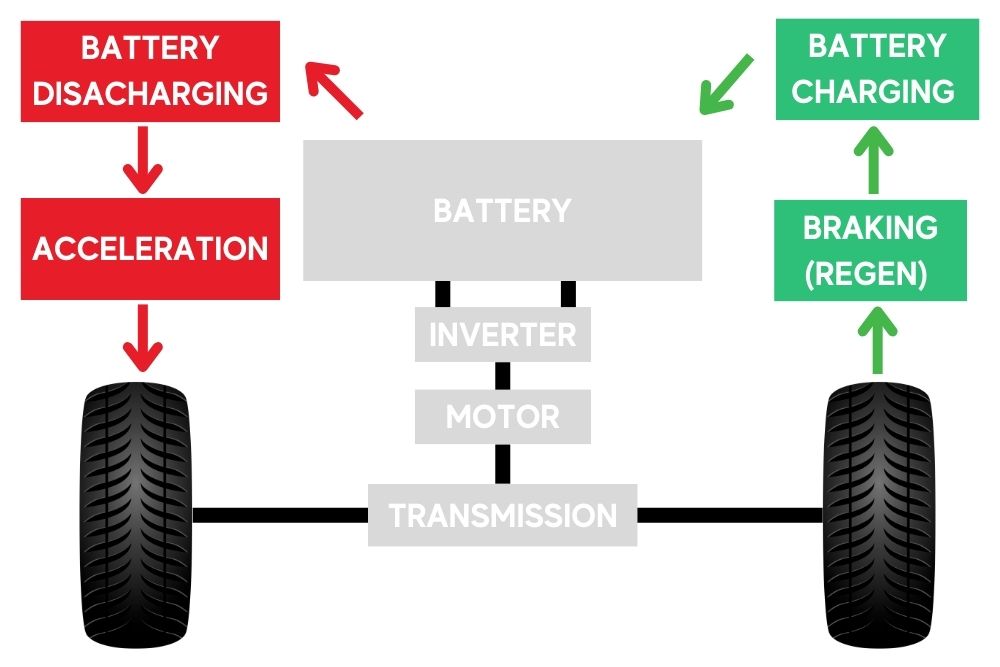
In EVs the electric motor operates bidirectionally, converting electrical energy to mechanical energy for forward motion and mechanical energy to electrical energy for battery recharging.
Regenerative braking is activated when you release the accelerator pedal, causing the motor to reverse direction and recharge the battery with excess energy.
If regenerative braking isn't slowing the vehicle adequately, conventional hydraulic brakes are still available for use.
One-Pedal Driving
Regenerative braking enables one-foot driving: press to accelerate and lift to decelerate.
When you remove your foot from the pedal, the vehicle should slow to a halt as if the brakes were applied. This driving style, known as one-pedal driving, may take time to adjust to for new EV drivers.
Many EVs have the option to switch Regenerative Braking on or off and some manufacturers allow the strength of regen breaking to be adjusted by the driver.
To find your new EV, click here and begin your search.