

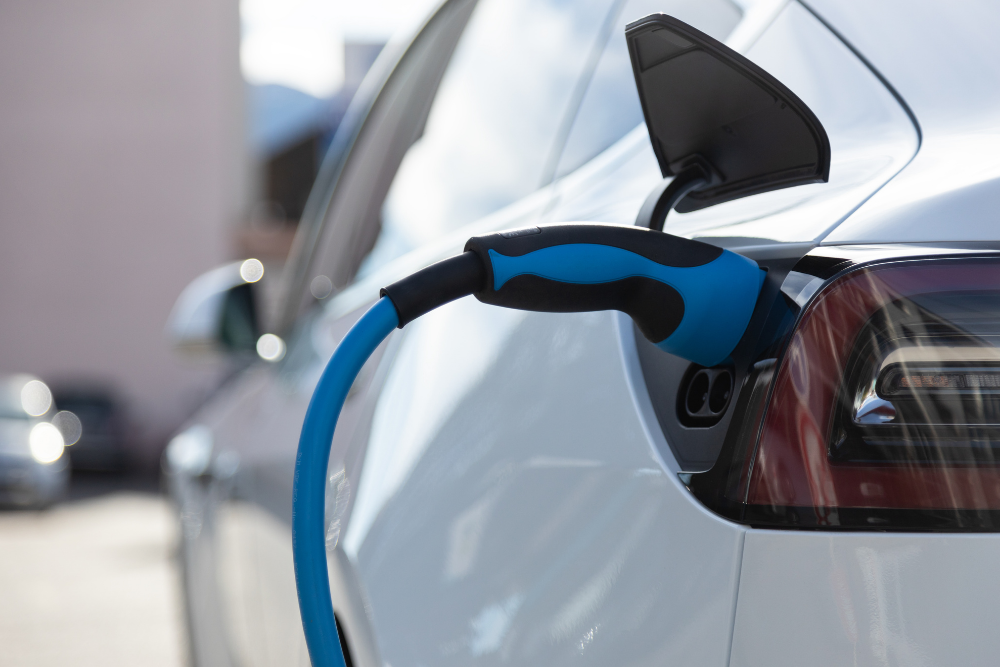
For many company car drivers, charging at home is the easiest and most cost-effective way to run an electric vehicle.
Instead of stopping at a petrol station, you can simply plug your company car in when you get home and have it ready for the following morning. And, with off-peak or dedicated EV electricity tariffs, home charging can be considerably cheaper than relying on the public charging network.
But if it's a company car plugged into your home electricity supply, there are some obvious questions.
Who pays for the electricity? Can your employer install a home charger? How are business charging costs reimbursed? And how can businesses manage home charging across multiple employees?
Can I Have a Home Charger for My Company Car?
Yes. If your property is suitable for a home charger, one can be installed for use with your company electric car.
Some employers choose to provide and fund home chargers for their company car drivers, while other drivers may already have a compatible charger installed.
For employees who regularly take their company car home, having access to a charger can make running an EV incredibly straightforward, simply plug in when you get home and charge while the car would parked.
Find out more about Lease Electric's Home Charging Solution
Can My Employer Install a Charger at My Home?
Yes. Businesses can arrange for EV charge points to be installed at employees' homes as part of their company car or fleet programme.
This can be particularly useful when transitioning multiple company vehicles to electric, giving drivers reliable access to charging without depending entirely on the public charging network.
Depending on the arrangement, the business may pay for the charger and installation directly or provide home charging as part of its wider company car package.
There are specific tax rules surrounding employer-provided EV charging facilities and home chargers, so businesses should always consider the individual circumstances and latest HMRC guidance when putting a scheme in place.
Lease Electric can introduce businesses to trusted charging partners to help make this process simple.
Who Pays for the Electricity?
This is often one of the first questions employees ask.
If you plug your company car into a charger at home, the electricity will normally appear on your household electricity bill.
That means your employer needs a way of identifying and, where applicable, reimbursing the cost associated with charging your company vehicle.
Fortunately, there are now several ways businesses can manage this.
How Can Employers Reimburse Home Charging Costs?
There are two main approaches businesses can consider: mileage reimbursement or automated home charging reimbursement.
HMRC Advisory Electric Rate
HMRC publishes an Advisory Electric Rate (AER) for fully electric company cars.
From 1 June 2026, the home charging rate is 7p per business mile.
For example, if an employee completes 500 eligible business miles:
500 miles × 7p = £35
The employer could reimburse £35 towards the electricity used for those business journeys using the HMRC advisory rate.
This can provide a relatively straightforward solution, particularly for businesses with a small number of electric company cars.
HMRC reviews its advisory rates regularly, so employers should always check the latest rate before calculating reimbursements.
Automated Home Charging Reimbursement
Businesses can also use specialist home charging reimbursement platforms.
These solutions are designed to take away some of the administration involved in calculating charging costs and reimbursing employees.
Depending on the platform, information from the employee's home charger, vehicle, electricity tariff and mileage can be used to calculate the appropriate charging cost.
There are a number of solutions available:
Which Home Charging Reimbursement Option Is Best?
There's no single solution that will suit every business.
For a company operating just a handful of electric vehicles, using the HMRC Advisory Electric Rate may provide everything needed.
For a larger company car or van fleet, an automated reimbursement platform may help reduce administration and provide better visibility of charging costs.
When choosing an approach, businesses should consider:
-
The number of employees charging at home
-
How much business mileage drivers complete
-
Whether employees have compatible smart chargers
-
How business and personal charging will be recorded
-
How reimbursements will be processed
-
What reporting the business requires
Putting a clear EV charging and reimbursement policy in place from the beginning can make the transition considerably easier for both employees and fleet managers.
What Are the HMRC Rules for Company EV Home Charging?
HMRC has provided greater clarity around the tax treatment of employer-funded and reimbursed EV charging.
Where an employer pays for or reimburses electricity used to charge a company electric car, exemptions can apply so that the reimbursement does not create an additional taxable benefit for the employee, subject to the relevant conditions.
The rules can differ where an employee is using their own privately owned electric vehicle for business journeys, so it's important to distinguish between a company car and a personal vehicle.
Read our guide to HMRC's July 2026 EV charging tax update
What About Business and Personal Mileage?
Company cars are often used for a combination of business travel, commuting and personal journeys.
If your employer reimburses business mileage using the Advisory Electric Rate, you'll need to keep an accurate record of your eligible business journeys.
Remember, your normal journey between your home and permanent workplace is generally considered private commuting rather than business mileage.
Automated charging reimbursement solutions can provide businesses with additional tools for managing the distinction between business and personal use, depending on the platform and setup being used.
How Can I Track How Much Electricity My Company EV Uses?
Modern smart home chargers make this much easier.
Most accompanying apps can provide information including:
-
The amount of electricity supplied in kWh
-
Individual charging sessions
-
Charging dates and times
-
Charging history
-
The length of charging sessions
Some platforms can combine this information with the driver's electricity tariff, helping calculate the actual cost of charging the vehicle at home.
This can be particularly useful for employers choosing an actual-cost reimbursement approach rather than a simple mileage rate.
Should I Get an EV Electricity Tariff?
You don't need a dedicated EV tariff to charge an electric company car at home, but it's certainly worth considering.
Many energy providers offer electricity tariffs with cheaper rates during certain overnight periods.
Drivers can then schedule their vehicle or smart charger to start charging automatically during the cheaper window.
For a company car covering significant mileage, regularly charging at an off-peak rate can make a substantial difference to overall running costs.
What If I Can't Have a Home Charger?
Not every company car driver has a driveway or access to suitable off-street parking.
That doesn't automatically mean an electric company car isn't suitable.
Other options can include:
-
Workplace charging
-
Local public charging
-
Destination charging
-
Rapid and ultra-rapid charging networks
Before choosing an EV, it's important to look at how the vehicle will actually be used and where it will be charged.
Daily mileage, regular journeys, access to workplace charging and nearby public infrastructure can all help determine which electric vehicle and charging setup is right for you.