

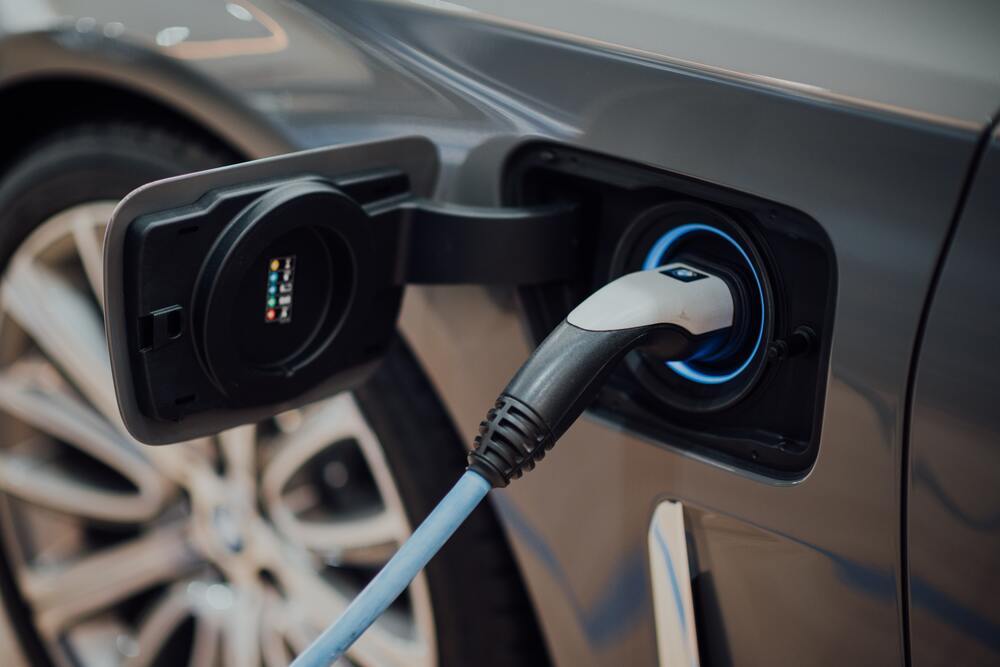
In recent years the Government have been providing businesses with lots of different carrots and sticks to accelerate the uptake of ultra-low emissions vehicles (ULEVs), and 2021 is no different. Below are all the new and continuing tax benefits and incentives the Government is providing in 2021-22 to help businesses switch to electric cars and vans.
For details on the 2022-23 tax year, see our latest update.
Benefit-in-Kind (BiK) Rates
For all company cars registered on or since 6th April 2020, the appropriate percentage of Benefit-in-Kind (BiK) tax increases by 1% from 6th April 2021. For electric cars which had attracted 0% in 2020-21, this means an employee will still pay an extremely low amount of company car tax for driving an all-electric car. A Volkswagen ID.3 Life Pro* with a 263-mile range for example would cost a 20% taxpayer only £5.40 a month in company car tax in 2021-22, increasing to only £10.81 a month until 2025. For the full breakdown of BiK rates by year see our handy BiK rate table.
For company cars registered prior to 6th April 2020, there is no change in the appropriate percentage of Benefit-in-Kind (BiK) tax unless the car is an electric car. Electric cars attract the same rate of company car tax irrespective of when they are registered. For the full breakdown of BiK rates by year see our handy pre-6th April 2020 BiK rate table.
*P11D Value of £32,415
Lease Rental Restriction
If a company leases its cars, then the finance element of the lease rental that the company pays constitutes a cost that can be offset against its profits (normally in the year that they are incurred), therefore paying less corporation tax.
From April 2021, the threshold for cars that can offset 100% of the lease rental against corporation tax reduces from 110 g/km of CO2 to just 50 g/km. If a car has CO2 emissions of 50g/km or less, then the full amount of the finance element of the lease rental will attract tax relief, whereas if the car exceeds 50 g/km then only 85% of the lease rental will attract tax relief. Alongside the great environmental benefits, opting for a plug-in hybrid or electric car now provides greater corporation tax relief too.
Van Benefit Charge
Unlike company cars which are taxed based on the value of the car and its associated CO2 emissions, if a van is driven by an employee for both business and personal use, the employee's tax is based on the Van Benefit Charge.
To incentivise the uptake of zero-emission vans, from 6th April 2021 there is ZERO van benefit charge for an electric van. As a result, an employee driving an electric van as a company car will pay no company car tax at all. As the employer's National Insurance Contributions (NICs) are linked to the Van Benefit Charge, opting for an electric van will also provide savings for the business too.
For all other vans, the government has announced that the van benefit charge will be uprated by the Consumer Price Index (CPI) from 6 April 2021 increasing from £3,490 to £3,500. Based on a 20% taxpayer, operating a van as a company car would cost the employee £700 a year which the employee would see as a £58.33 reduction in their salary.
Super Deductions
One of the big news stories from the March budget was the introduction of super deductions which until the end of March 2023, allows companies to claim 130% capital allowances on qualifying plant and machinery investments. With HM Treasury clarifying that electric vehicle chargepoint count as plant and machinery, those businesses with the capability to install workplace charging points in their car parks, depots and forecourts will be able to cut their taxes by 25p for every pound the company invests.
To date and until 31st March 2023, electric vehicle chargepoints have qualified for 100% First Year Allowance (FYA), so with their newfound eligibility, under super deductions, fleets will be able to enjoy the additional 30 percentage benefit.
For those businesses which do not benefit from capital allowances there is also the Government's Workplace Charging Scheme (WCS) which provides a £350 grant for every socket installed, up to a maximum of 40 chargepoints (£14,000). So whichever way you like, there has never been a better time to install electric vehicle charging points.
Fuel Benefit Charge
While there are lots of varying means for businesses to reimburse their employees for fuel, the government has announced that the fuel benefit charges for cars and vans will be uprated by the Consumer Price Index (CPI) from 6 April 2021. The uprate will take effect as follows:
- car fuel benefit charge multiplier will uprate from £24,500 to £24,600
- van fuel benefit charge will uprate from £666 to £669
HMRC do not classify electricity as a fuel and therefore the charging of electric cars and vans does not attract any benefit-in-kind (BiK) payments.
Plug-in Car Grant
The Government's Plug-in Car Grant (PiCG) administered by the Office for Zero Emission Vehicles (OZEV) provides a discount on the price of brand new low-emission vehicles given directly to vehicle dealerships and manufacturers. You do not need to do anything if you want to buy or lease one of these vehicles, the dealer will include the value of the grant in the vehicle’s price.
To be eligible for the grant, cars must cost less than £35,000. This is the recommended retail price (RRP), and includes VAT and delivery fees. The grant will pay for 35% of the purchase price for these vehicles, up to a maximum of £2,500.
Plug-in Van Grant
The Government's Plug-in Van Grant (PiVG) administered similarly to that of the PiCG provides a discount of 35% of the purchase price of a van, up to a maximum of £3,000 for small vans and £6,000 for large vans. Eligible vans are vehicles that have CO2 emissions of less than 50g/km and can travel at least 96km (60 miles) without any emissions at all. Small vans are defined as having a Gross Vehicle Weight (GVW) of less than 2,500 kilograms (kg), whereas large vans as defined as those between 2,500kg and 3,500kg.
Electric Vehicle Homecharge Scheme (EVHS)
The Electric Vehicle Homecharge Scheme (EVHS) is a grant that provides a 75% contribution to the cost of one chargepoint and its installation. A grant cap is set at £350 (including VAT) per installation. The main requirement is that a person owns, leases, or has ordered a qualifying vehicle and has dedicated off-street parking at their property. A person may apply for 2 chargepoints at the same property if they have 2 qualifying vehicles.
Workplace Charging Scheme (WCS)
The Workplace Charging Scheme (WCS) is a voucher-based scheme designed to provide eligible applicants with support towards the upfront costs of the purchase and installation of EV chargepoints. The contribution is limited to the 75% of purchase and installation costs, up to a maximum of £350 for each socket, up to a maximum of 40 across all sites for each applicant. The Workplace Charging Scheme (WCS) is available to registered businesses, charities and public sector organisations which has dedicated off-street parking