

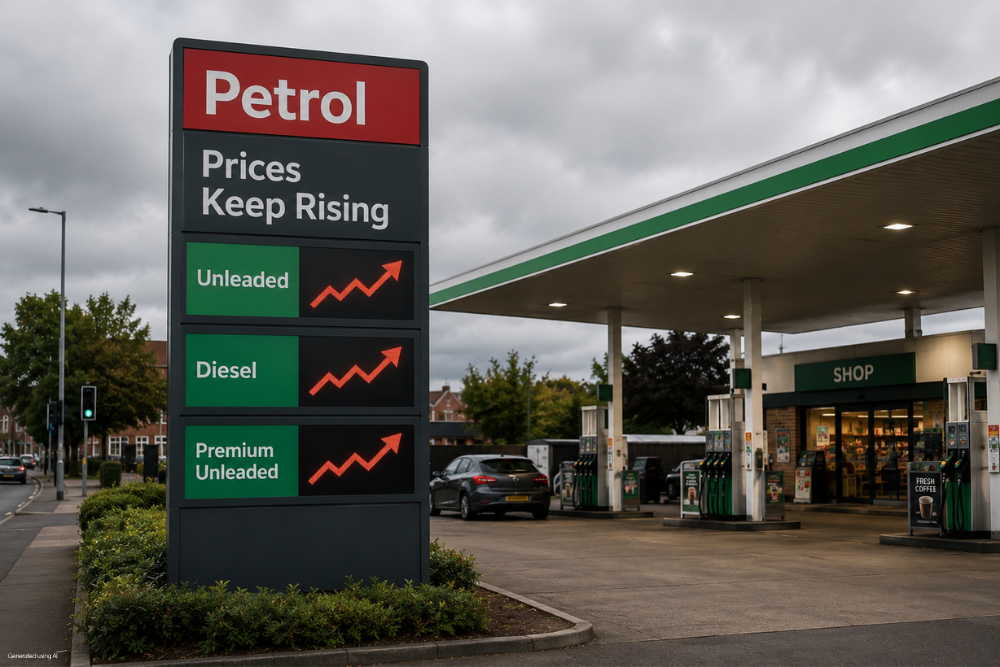
UK drivers are once again feeling the pressure at the pumps, with petrol prices expected to reach 160p per litre and diesel continuing its climb back towards 180p per litre.
Rising global oil prices, driven by ongoing geopolitical uncertainty in the Middle East, are pushing up the cost of motoring for millions of drivers.
For many households and businesses, it's another reminder that the cost of running a petrol or diesel vehicle is largely outside of their control.
Meanwhile, electric vehicle drivers are seeing the opposite trend.
Fuel prices continue to climb
According to the RAC, average UK fuel prices have risen rapidly over recent weeks, reversing earlier reductions seen at the start of the summer. Petrol is now averaging around 157.8p per litre, with diesel above 175p per litre, and further increases are expected if wholesale oil prices remain high.
The increase is being driven by:
-
Higher global oil prices
-
Ongoing instability in international energy markets
-
Increased wholesale fuel costs
-
Continued pressure on diesel supplies
Unfortunately, these are factors individual motorists have little influence over.
How much have fuel prices risen?
Over the past month, petrol and diesel prices per litre have risen, climbing to similar prices seen earlier in the year.
The table below highlights just how much prices at UK petrol and diesel pumps have increased.
| Fuel Type | 21.03.2026 | 31.03.2026 | 20.04.2026 | 12.05.2026 | 15.06.2026 | 29.07.2026 | Forecast |
| Unleaded |
143.35p |
152.01p |
157.97p |
157.78p |
151.40p |
159.05p |
Likely to Rise
|
| Motorway Unleaded |
161.80p |
167.91p |
181.62p |
|
180.22p |
||
| Diesel |
163.73p |
181.20p |
190.94p |
182.77p |
176.77p |
177.59p |
|
| Motorway Diesel |
175.03p |
183.05p |
202.80p |
|
199.73p |
||
The figures have been sourced from RAC Fuel Watch and RAC Charge Watch. All information was correct on date of publication - 29.07.2026, pricing of fuel, public charging and home charging tariffs are subject to change.
EV charging costs are moving in the opposite direction
While petrol and diesel prices are becoming increasingly volatile, the cost of charging an electric vehicle at home has become even more attractive.
Earlier this month, the Government confirmed the temporary removal of VAT on domestic electricity bills, reducing household electricity costs and making home charging even more affordable for many EV drivers.
For drivers who already charge overnight on a dedicated EV tariff, running costs were already significantly lower than petrol or diesel. The VAT change only strengthens that advantage.
Read more about the change here:
How does charging an EV compare to filling up with petrol?
Cost Comparison – July 2026
Volkswagen ID.3 vs Volkswagen Golf
We have compared the Volkswagen ID.3 with the Volkswagen Golf Hatchback due to their similar dimensions.
| Volkswagen ID.3 | Volkswagen Golf |
|---|---|
|
Volkswagen ID.3 150kW Match Pro S 79kWh 5dr Auto [5 Seats] 350 miles WLTP combined range | Battery capacity: 82kWh |
Volkswagen Golf Hatch Life 1.5 TSI 115PS 6-Speed Manual 5 Door 52.3mpg WLTP combined |
|
Home charging with Good Energy: 1.54p per mile Home charging with EDF Energy: 1.98p per mile |
Unleaded petrol: 13.06p per mile |
| Public ultra-rapid charging, 150kW or above: 19p per mile | Motorway unleaded petrol: 14.89p per mile |
More predictable running costs
One of the biggest advantages of driving electric isn't simply that it could be more affordable, it's that costs are generally more predictable.
Fuel prices can rise dramatically in a matter of days following international events. Electricity prices can also change, but drivers charging at home on fixed or off-peak tariffs are often protected from the daily volatility experienced on UK forecourts.
For businesses operating fleets, or employees using an EV through Salary Sacrifice, this predictability can make budgeting significantly easier.
The long-term picture
Fuel prices have fluctuated dramatically over the past few years, and recent events show just how quickly global markets can affect UK motorists.
Electric vehicles aren't immune to changes in energy prices, but home charging continues to offer a lower-cost alternative for many drivers, particularly when combined with off-peak tariffs and recent Government support.