
Electric vehicles (EVs) may seem like a modern innovation, but their history stretches back almost 200 years. Long before the Zero Emission mandate, fast chargers, and lithium-ion batteries, engineers were already experimenting with electric propulsion.
In fact, electric vehicles were once common in cities, rail depots, and delivery fleets. Britain even operated thousands of electric delivery vehicles decades before modern EV adoption.
This blog explores the history of electric vehicles, from early experiments in the 1800s to today’s global EV revolution.
Contents: Early Electric Vehicles | Early Electric Boom | Early Electric Taxis | Early Delivery Lorries | The Electric Milk Float | Electric Refuse Trucks | Electric Public Transport | Who manufactured early electric vehicles? | Why did Early Electric Vehicles Decline in popularity? | Did Electric Vehicles completely disappear? | Why the revival in electric vehicles? | Early Modern EVs
Early Electric Vehicles
1820s - 1880s
The earliest electric vehicles appeared in the 1820s and 1830s, when inventors in Europe experimented with electric propulsion using primitive batteries.
One of the first examples was created by Scottish inventor Robert Anderson in 1835,
who built an electric carriage powered by non-rechargeable batteries.
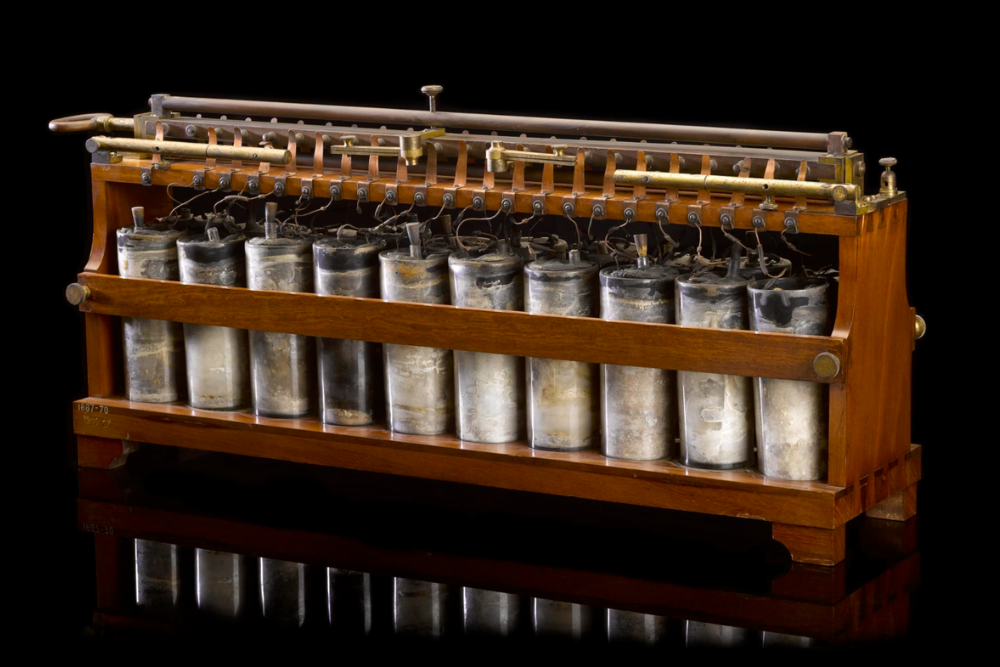
A major breakthrough came in 1859, when French physicist Gaston Planté invented the rechargeable lead-acid battery, making practical electric vehicles possible, (seen on the right)
By the late 1800s, engineers were building vehicles that are considered somewhat comparable to modern cars.
Early Electric Boom
1880s - 1920s
By the late 19th century, electric vehicles were becoming popular in cities.
Around 1900, electric cars made up roughly one-third of vehicles in the United States, competing directly with petrol and steam cars.
Electric vehicles were popular because, much like today, they were: easy to drive, quiet, free from exhaust fumes and simple to start compared with petrol engines.
The UK was an early adopter of electric transport, particularly for urban deliveries and industrial vehicles.
During this time electric vehicles were widely used by railways, dairies, factories, and municipal services.
Early Electric Taxis 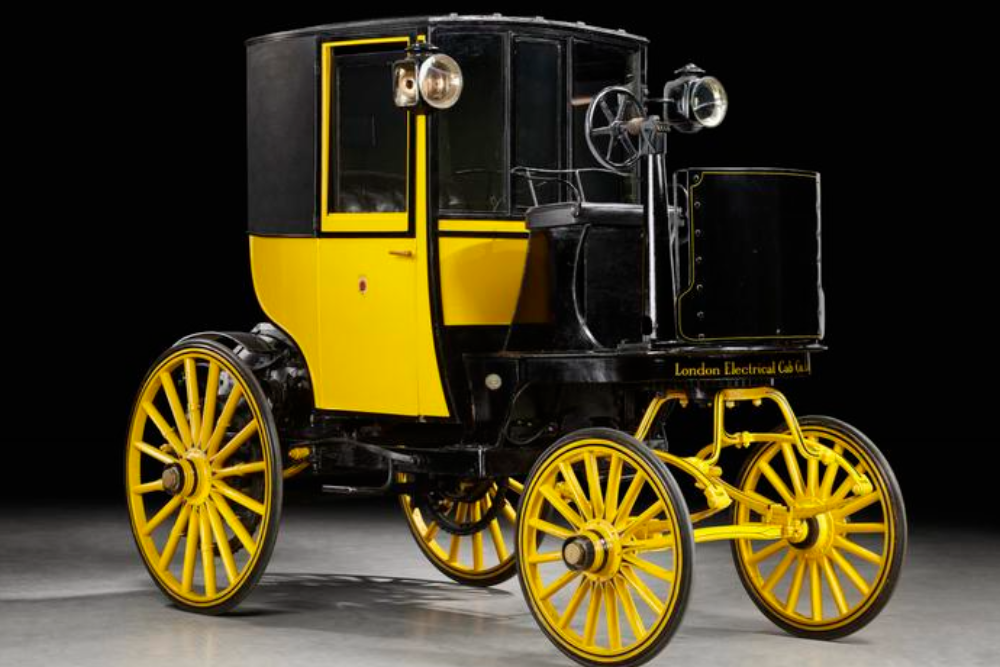
London 1897-1899
Just like in New York, London operated one of the earliest electric taxi fleets of the 19th century.
In 1897, the London Electrical Cab Company introduced a fleet of electric taxis known as “Berseys”, named after the company’s manager Walter Bersey.
These electric cabs were designed to reduce noise and pollution in London’s crowded streets. They were quiet, easy to drive, and did not require the difficult hand-cranking needed to start petrol vehicles.
However, the fleet faced technical problems and financial difficulties, and the company closed in 1899. Despite this, the Bersey taxis were an important early example of electric public transport.
Early Delivery Lorries
London 1917 -1920s
During the early 20th century, electric vehicles began replacing horse-drawn carts in London. Horse transport was slower and created sanitation problems in crowded city streets, making electric vehicles a cleaner and more efficient alternative.
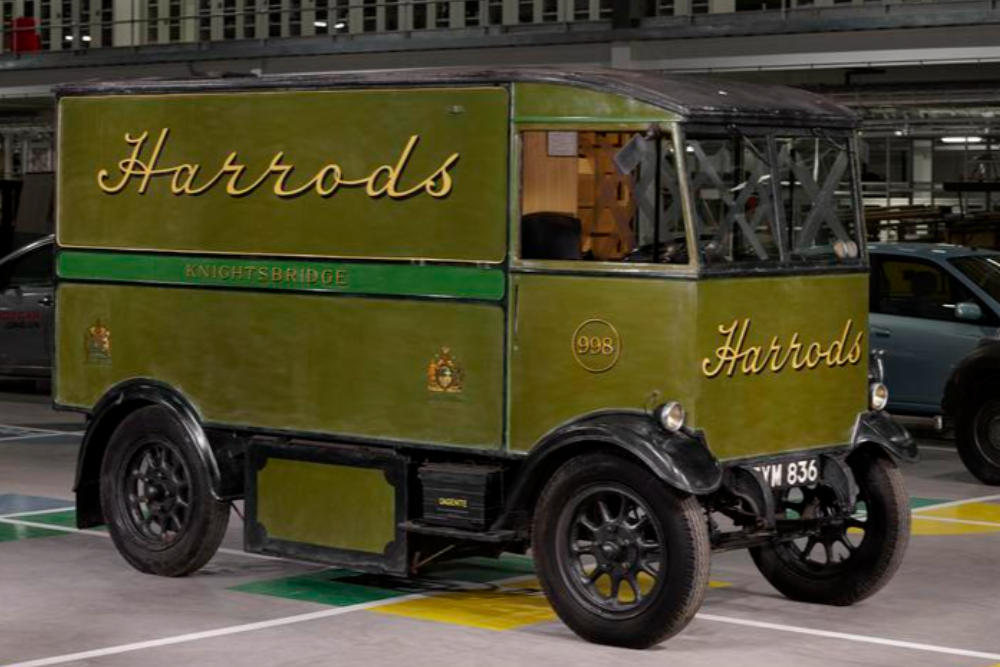
Large businesses such as Harrods adopted electric delivery vans to transport goods from their stores to customers’ homes across the city. These vehicles were quiet, reliable, and well suited to short urban delivery routes.
Electric vehicles were also used by the railway network. A well-known example shows electric lorries charging at the Midland Railway goods depot at St Pancras Station in July 1917. These vehicles transported goods from railway depots to nearby warehouses and businesses, performing a role similar to today’s last-mile delivery vans.
Like many early electric vehicles, they were typically charged overnight before returning to service the following day
The Electric Milk Float
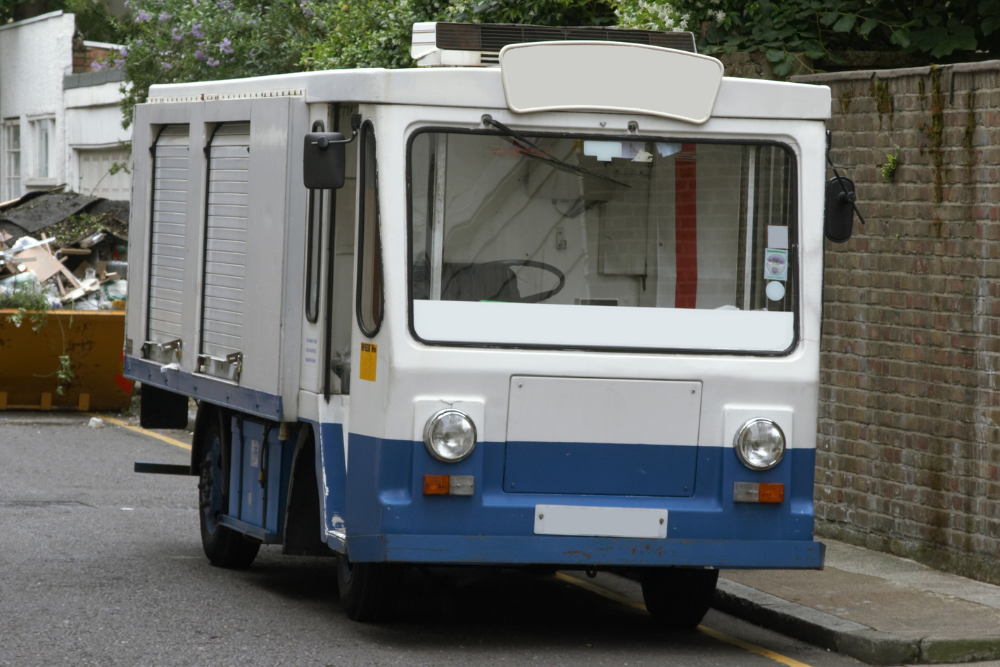
One of the most iconic electric vehicles in British history is the milk float.
From the early 20th century onward, dairies across the UK replaced horse-drawn carts with electric delivery vehicles.
Milk floats were ideal for urban deliveries because they were:
-
quiet in residential streets
-
easy to operate
-
efficient for stop-start routes
Typical milk floats travelled 10–16 mph and were designed so drivers could easily hop on and off while delivering bottles.
For decades, milk floats were the most common electric road vehicles in Britain, used widely for doorstep deliveries. Some still exist today, and although they are no longer seen as often, there has been a small resurgence. As interest in supporting local businesses and reducing environmental impact grows, local dairies and regular doorstep deliveries are beginning to make a comeback.
Electric Refuse Trucks
Electric vehicles were also widely used by local councils in Britain during the early and mid-20th century.
From the 1920s onwards, many towns and cities introduced electric refuse collection vehicles. These trucks were well suited to stop-start routes and short distances, making electric power practical for daily waste collection.
Companies such as Shelvoke & Drewry and Morrison-Electricar produced electric municipal vehicles used for rubbish collection and street cleaning.
Although most were eventually replaced by diesel trucks, these early electric refuse vehicles demonstrated how EVs could work effectively in urban service fleets, a concept that is now returning with modern electric refuse trucks used by councils today.
Electric Public Transport
Electric Trams
Electric power was also widely used in public transport.
In the early 20th century, many British cities operated electric tram networks, powered by overhead wires. These systems proved that electric propulsion could work reliably for urban transport.
Later, trolleybuses were introduced. These vehicles ran on roads like buses but were powered by overhead electric lines instead of petrol engines.
Cities such as London, Leeds, and Bradford operated large trolleybus networks until the 1960s.
Electric Trains
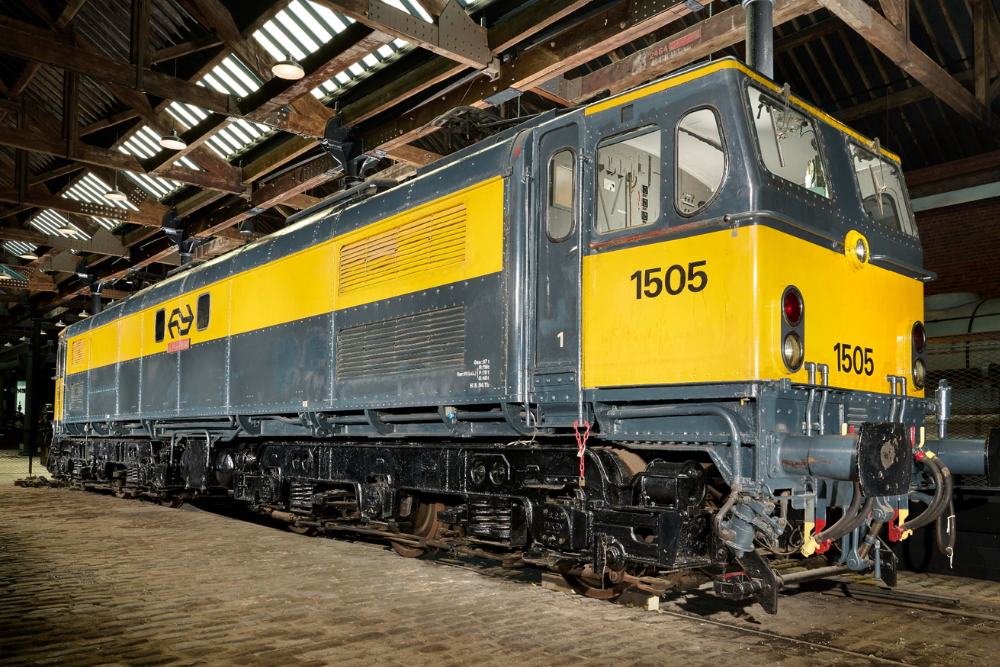
Early railways relied on steam locomotives, engineers began experimenting with electric traction in the late 19th century. Electric trains offered several advantages, including quieter operation, faster acceleration, and no smoke emissions, making them ideal for busy urban railways.
One of the earliest examples was the City and South London Railway, which opened in 1890 as the world’s first deep-level electric underground railway and later became part of the London Underground network. Soon after, the Liverpool Overhead Railway (1893) became one of the world’s first electric elevated railways, serving Liverpool’s busy docklands.
Electric railways expanded further in the early 20th century as suburban routes around London and other cities were electrified, improving commuter travel.
Following the Second World War, British Rail introduced a new generation of electric locomotives as part of efforts to modernise the railway network.
Although large parts of the UK rail system remained reliant on diesel and steam for many years, electric trains demonstrated the benefits of electric propulsion long before electric cars became mainstream.
Who manufactured early electric vehicles?
Several British companies produced electric vehicles during the 20th century. Examples include:
Morrison-Electricar: A leading manufacturer of milk floats and electric delivery vehicles.
Victor Electrics: Produced electric bread delivery vans beginning in the 1920s.
Midland Electric Vehicles: Manufactured commercial electric vehicles in Leamington Spa.
Smith Electric Vehicles: Founded in 1920, Smith originally produced electric milk floats and delivery vehicles. Over time, the company became one of the largest manufacturers of commercial electric vehicles in the UK.
Why did Early Electric Vehicles Decline in popularity?
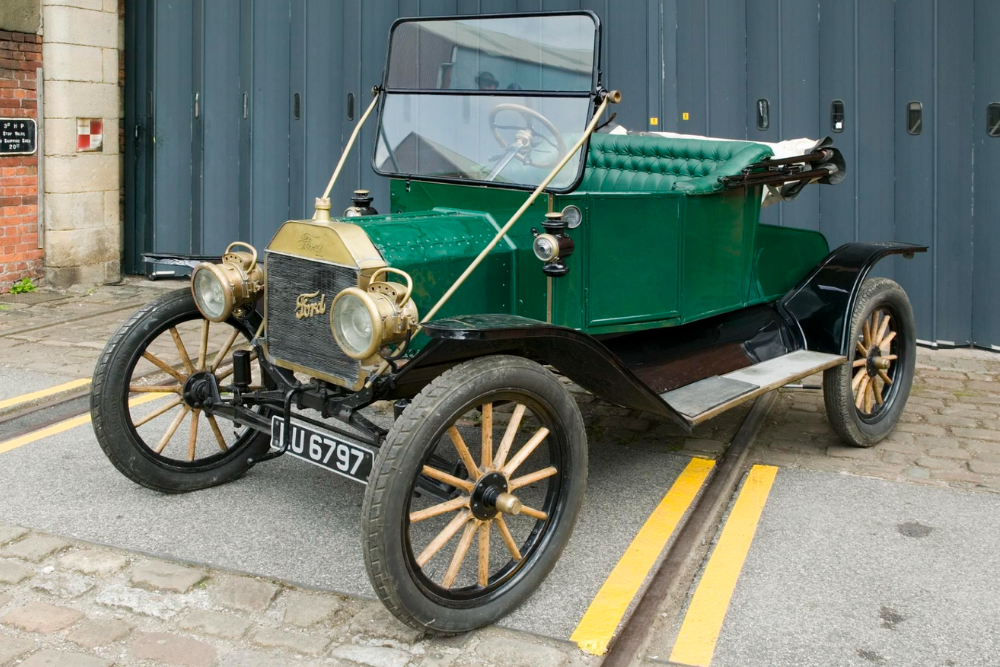
Despite their early success, electric vehicles declined during the early 20th century.
Several changes favoured petrol vehicles:
-
the invention of the electric starter motor (1912)
-
mass production of petrol cars such as the Ford Model T
-
cheap fuel from expanding oil production
-
longer road networks requiring greater driving range
By the 1930s, petrol vehicles had largely replaced electric passenger cars.
Did Electric Vehicles completely disappear?
Electric vehicles did not completely disappear. In Britain, companies such as Morrison-Electricar and Smith Electric Vehicles continued producing thousands of electric delivery vehicles for dairies and local businesses. These vehicles were reliable, simple, and well suited to short urban routes.
By the mid-20th century, engineers began experimenting with electric cars again in response to urban pollution and fuel concerns, focusing on better batteries, lighter designs, and small commuter vehicles.
AMC Amitron (1967)
One example was the AMC Amitron (1967), an experimental electric car designed to travel up to 150 miles on a charge. Although it never entered production, it introduced ideas such as advanced batteries and regenerative braking, which later became common in modern EVs
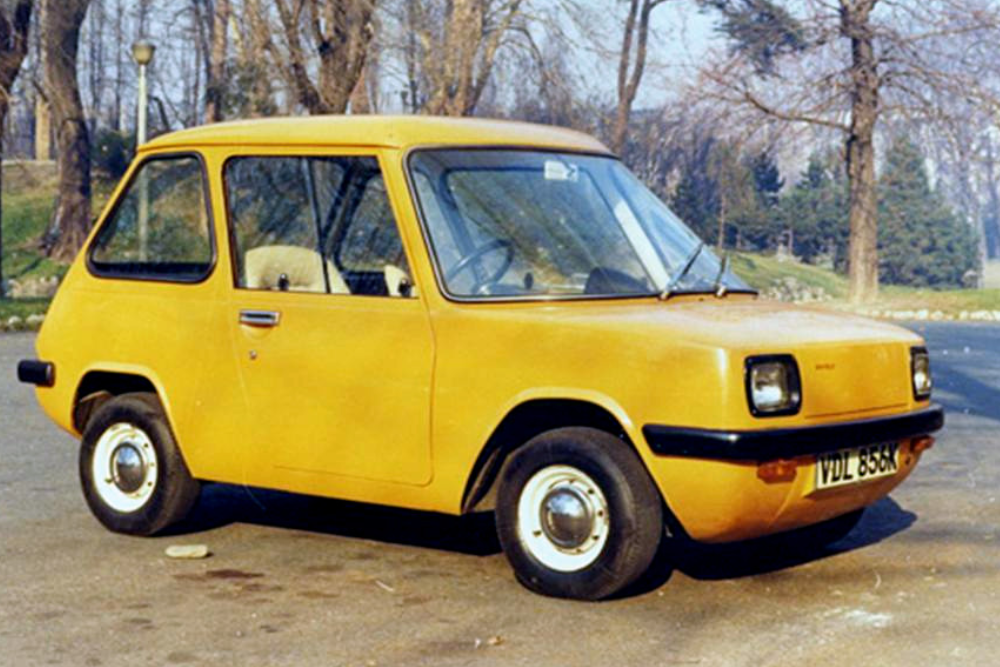
The Enfield 8000 (1973)
Built on the Isle of Wight, the Enfield 8000 was designed as a small urban electric car during the global oil crisis.
The vehicle could seat two passengers with a top speed of around 48 mph and a range of 40 miles.
Although only around 120 cars were produced, many were used by electricity boards in southern England. The Enfield 8000 is now considered one of the first modern British electric cars.