

Electrifying a fleet isn't about replacing every petrol or diesel vehicle with an electric equivalent.
It's about understanding your business, your drivers and your vehicles and working out where electric makes sense.
For some businesses, that could mean moving an entire company car fleet to electric. For others, it might mean starting with a handful of vehicles, trialling an electric van on a particular route or waiting until the right vehicle becomes available for a more demanding role.
At Lease Electric, we believe fleet electrification should be practical, considered and tailored to your business.
Start With the Job, Not the Vehicle
It's very easy to start an EV conversation with:
"Which electric car or van should we choose?"
We'd start somewhere else:
What does the vehicle actually need to do?
Look at the job each vehicle performs within your business.
How far does it travel on a normal working day? Is that mileage predictable? Does it carry equipment? Does it tow? Where is it kept overnight? Does it regularly make unexpected journeys?
For commercial vehicles, payload, load space and towing requirements can be just as important as range.
For company cars, the driver's commute, business mileage and ability to charge may be more relevant.
Rather than asking whether your whole fleet can go electric, start by identifying which individual vehicle roles are already suitable.
You may find there are some very straightforward opportunities.
Don't Plan Around Range Alone
Range is understandably one of the first things businesses look at when considering an EV.
But a vehicle's quoted range doesn't tell the whole story.
Real-world range can be affected by temperature, motorway driving, payload, driving style and the use of heating or air conditioning.
More importantly, ask yourself:
How much range does this driver actually need?
A vehicle doesn't necessarily need 400 miles of range if it normally travels 80 miles per day and can conveniently recharge overnight.
Equally, a 250-mile electric van may not be the right solution if its working day involves heavy loads, towing and unpredictable long-distance journeys.
Choosing an EV should be based on the demands of the role, not simply finding the vehicle with the biggest battery.
Where Will Your Vehicles Spend the Night?
This is one of the most useful questions you can ask when considering an electric fleet.
If a company car goes home with an employee every evening, home charging could become its primary source of energy.
If vans return to a depot overnight, workplace charging could provide another solution.
If vehicles are constantly travelling between sites, public charging may play a bigger role.
Some fleets will need all three.
Think about:
Home Charging
Can drivers install a charger at home? How will business mileage and electricity costs be reimbursed?
Workplace Charging
Could vehicles charge while employees are working or overnight? Is there sufficient electrical capacity on site?
Public Charging
How frequently will drivers need it? Which networks are available on regular routes? How will charging be paid for and recorded?
Charging shouldn't be an afterthought once you've ordered the vehicles.
Ideally, the vehicle and charging strategy should be considered together.
Put Electric to the Test
The best way to understand whether an EV will work is simply to use one. That's particularly important for electric vans.
Load it.
Drive the normal routes.
Take it to customer sites.
Charge it where your drivers would actually charge.
Use it during a normal working week.
A demonstrator can reveal things that vehicle specifications can't from whether equipment fits comfortably in the back to how much range remains after a fully loaded motorway journey.
It also gives drivers an opportunity to experience electric before a wider fleet change is introduced.
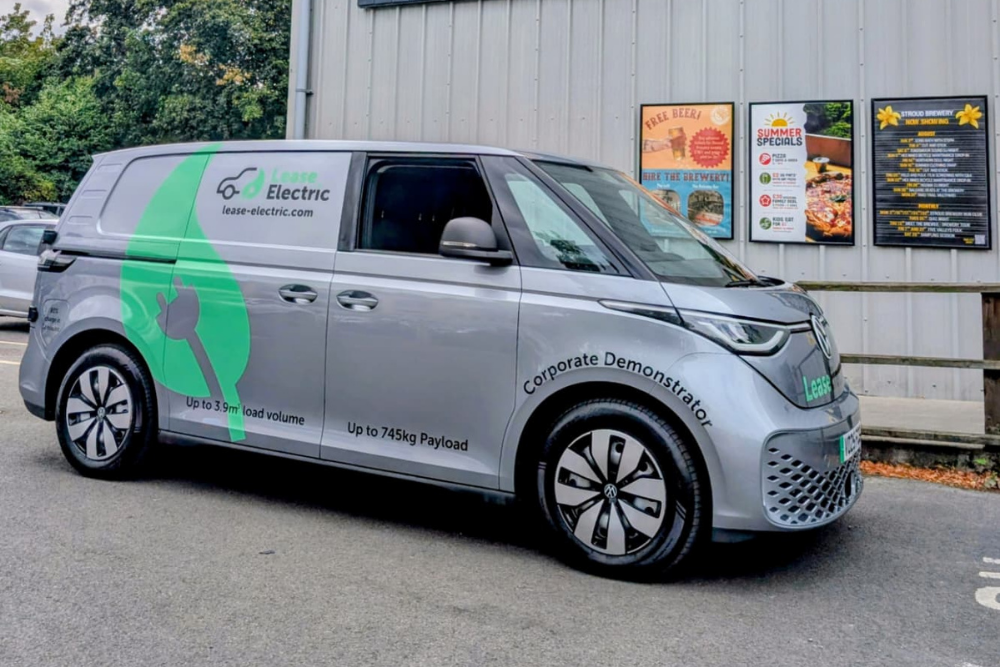
At Lease Electric, we've seen first-hand how valuable longer-term demonstrations can be for businesses considering their first electric vehicles, find our more about our ID.Buzz Corporate Demonstrator.
Work Out What Electric Really Costs Your Business
Comparing a diesel vehicle with an EV shouldn't stop at the monthly rental.
Instead, look at the wider financial picture.
Consider vehicle rental or finance costs alongside:
-
Fuel versus electricity
-
Servicing and maintenance
-
Vehicle taxation
-
Company car Benefit-in-Kind
-
Employer National Insurance where applicable
-
Insurance
-
Charging costs
-
Charge point installation
-
Public charging
-
Mileage reimbursement
-
Downtime
The cheapest vehicle on a quotation isn't necessarily the cheapest vehicle to operate.
Looking at the whole-life cost can give businesses a much more realistic comparison.
Decide How You'll Pay for Charging
With petrol and diesel fleets, fuel cards have made business fuel relatively straightforward to manage.
Electric introduces a few more possibilities.
One driver might charge almost entirely at home. Another may use workplace chargers. Someone travelling nationally could regularly use the public charging network.
Businesses therefore need to decide how these costs will be managed.
There are now several fleet charging and reimbursement solutions available, including providers such as Allstar, Paua and Rightcharge, which can help businesses manage different elements of EV charging.
The right solution will depend on how your vehicles and drivers operate.
It's worth establishing this before your EVs arrive so drivers aren't left paying for charging themselves and submitting a collection of receipts at the end of every month.
Don't Forget Your Drivers
You can choose the perfect vehicle and install the perfect charging solution – but your drivers still need to be comfortable with the change.
For someone who has never driven an EV, even simple things can initially feel unfamiliar.
How do I public charge?
Which app do I need?
How long should I charge for?
Should I charge to 80% or 100%?
What happens on a 300-mile journey?
What does regenerative braking do?
A little education can go a long way.
Simple EV guides, vehicle handovers, charging demonstrations and the opportunity to test an EV before making the switch can remove much of the uncertainty.
After all, fleet electrification works best when the people driving the vehicles understand how to get the most from them.
You Don't Have to Electrify Everything
This is perhaps the most important point.
Not every vehicle in your fleet has to be electric tomorrow.
There may be vehicles within your fleet that are an obvious fit for electric today.
Others might need changes to charging infrastructure first.
And there may still be specialist or high-mileage roles where the current generation of electric vehicles doesn't quite meet your operational requirements.
That's okay.
Fleet electrification doesn't have to be all or nothing.
A sensible strategy might mean replacing vehicles with electric alternatives as existing leases end, introducing EVs department by department or beginning with the drivers and journeys that are easiest to transition.
As vehicle technology, charging infrastructure and your own fleet requirements develop, the plan can develop with them.
Where Should Your Business Start?
If you're considering moving your fleet to electric, start with three questions:
1. Which vehicles could realistically be electric today?
2. Where would those vehicles charge?
3. Does switching them make operational and financial sense?
If you can answer those three questions, you've already started building your fleet electrification strategy.
And if you can't answer them yet, that's where we can help.
Fleet Consultancy from Lease Electric
At Lease Electric, we work with businesses to make fleet electrification simpler.
Rather than simply providing a list of electric cars or vans, our Fleet Consultancy Service looks at how your organisation actually operates.
We can help you consider:
-
Your existing fleet and replacement cycles
-
Vehicle usage and mileage
-
Electric car and van suitability
-
Demonstrator vehicles
-
Business Contract Hire
-
Salary Sacrifice
-
Home and workplace charging
-
Public charging
-
Charging reimbursement
-
Driver education
-
Fleet policy
-
Whole-life costs
-
Longer-term fleet planning
Whether you're looking to introduce your first EV, transition a handful of company cars or develop a strategy for a larger mixed fleet, we'll help you understand where electric works and where it might not quite work yet.
Because electrifying your fleet shouldn't be about forcing every vehicle to fit.
It should be about finding the right vehicle, for the right job, with the right charging solution behind it.
Talk to Lease Electric
Thinking about electrifying your company cars or commercial vehicles?
Speak to the Lease Electric team about our Fleet Consultancy Service and let us help you work out your next step.