

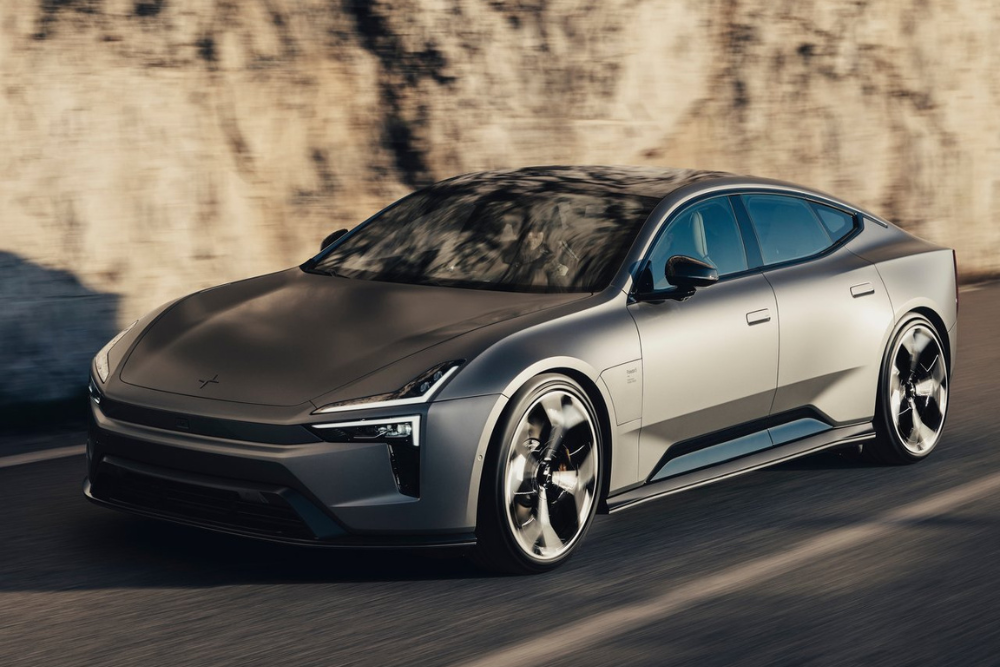
Polestar has published the full carbon footprint of its Polestar 5 electric GT, continuing its push for greater climate transparency in the automotive industry.
While electric vehicles are widely recognised as a key solution for reducing tailpipe emissions, the environmental impact of vehicle manufacturing is becoming an increasingly important part of the conversation.
Polestar began publishing full LCAs for its vehicles in 2020, and with the addition of the Polestar 5, every vehicle in its line-up now has publicly available carbon footprint data (available at polestar.com).
At present, Polestar remains the only automotive manufacturer publishing the full carbon footprint of every car it sells.
This level of transparency is becoming increasingly important as both consumers and regulators push for greater accountability around EV supply chains and production emissions.
By releasing a full Life Cycle Assessment (LCA) for the Polestar 5, the Swedish EV manufacturer is once again highlighting where emissions really occur in modern car production and what can be done to reduce them.
The Carbon Footprint of the Polestar 5
Cradle to Gate
According to Polestar’s latest data, the cradle-to-gate (before handover) carbon footprint of the Polestar 5 is 23.8 tonnes of CO₂ equivalent (tCO₂e).
Cradle-to-gate emissions include everything up until the vehicle reaches the customer, including:
-
Raw material extraction
-
Component production
-
Battery manufacturing
-
Vehicle assembly
-
Logistics and delivery
This stage represents one of the largest environmental impacts in the lifecycle of an electric vehicle.
Cradle to Grave
Polestar’s latest data shows that the EV manufacturer is prepared to provide Life Cycle Emissions calculations for the Polestar 5. These calculations consider all processes across the vehicle’s assumed 200,000 km (124,274 miles) lifetime, including end-of-life treatment.
The carbon footprint during the vehicle’s use phase is highly dependent on how the electricity used for charging is generated. Using the global average electricity mix, greenhouse gas (GHG) emissions from the vehicle’s use phase are estimated at 12.0 tCO₂e. With the European average electricity mix, emissions decrease significantly to 3.5 tCO₂e.
Customers can further reduce their climate impact by charging with renewable electricity. For example, charging exclusively with wind power results in emissions of just 0.5 tCO₂e.
Both the global and European electricity mix scenarios account for projected reductions in carbon intensity over the vehicle’s assumed 15-year lifetime.
Total Carbon Footprint 200,000km
- Production (Cradle to Gate) 25.4tCO₂e.
- Electricity (European Electricity Mix) 3.5tCO₂e.
- End of Life 1.2tCO₂e.
Total: 30.1tCO₂e.
Why Manufacturing Materials Matter
One of the biggest drivers of carbon emissions in vehicle production is materials, particularly aluminium.
Aluminium is widely used in modern vehicles because it reduces weight and improves efficiency, but its production is extremely energy intensive.
For the Polestar 5, the company has significantly changed how its aluminium is sourced:
-
13% of the aluminium used is recycled
-
83% comes from smelters powered by renewable electricity
By switching to lower-carbon aluminium supply chains, Polestar estimates it has avoided more than 14 tonnes of CO₂ per vehicle compared with conventional aluminium sourcing.
That single decision highlights how supply chain choices can dramatically influence the environmental impact of EV manufacturing.
As Fredrika Klarén, Head of Sustainability at Polestar, explains:
“You cannot reduce what you don’t measure. Making the carbon footprint of a car visible helps focus the industry on where emissions occur, particularly in materials and manufacturing.”
In other words, transparency is the first step towards meaningful emissions reduction.
Renewable Energy in EV Manufacturing
Another major contributor to vehicle manufacturing emissions is electricity used in factories and battery production.
To reduce this impact, Polestar says facilities producing the Polestar 5, including battery cell modules and key battery materials, operate using renewable electricity.
Battery production is often highlighted as the most carbon-intensive stage of EV manufacturing. Using renewable power during production significantly lowers the overall carbon footprint of the vehicle before it ever reaches the road.
Sustainable Materials Inside the Polestar 5
Beyond manufacturing, Polestar has also introduced lower-impact materials throughout the vehicle interior.
One of the most notable is a natural fibre composite developed with Bcomp, using flax-based ampliTex™.
This bio-based alternative to carbon fibre:
-
Uses 50% less fossil-based material
-
Can be up to 40% lighter than conventional plastic composites
The interior also incorporates a range of recycled materials, including:
-
Econyl carpets made from discarded fishing nets
-
Recycled PET textiles
-
A mono-material PET frunk construction designed for easier recycling at end of life
Customers who opt for leather can also choose Bridge of Weir Nappa leather, which is chrome-free and sourced as a natural by-product of the food industry.
These material innovations demonstrate how sustainability in automotive design increasingly extends beyond just the powertrain.
Performance Still Matters
Despite its sustainability focus, the Polestar 5 remains a high-performance electric grand tourer.
The four-door GT offers:
-
Up to 650 kW (884 hp)
-
1,015 Nm of torque
-
Up to 678 km WLTP range
Its 800-volt architecture supports 350 kW DC rapid charging, enabling the battery to charge from 10–80% in around 22 minutes.
The Polestar 5 is now available with Lease Electric:
Polestar 5 Electric Leasing Deals
Why Manufacturing Emissions Still Matter for EVs
Even as EV adoption grows rapidly, the industry continues to grapple with the embedded carbon emissions created during vehicle production.
On average, manufacturing an electric vehicle and its battery typically generates between 15 and 20 tonnes of CO₂ equivalent before the car is ever driven.
For example, a life cycle assessment of the Mercedes-Benz EQC shows that 16.4 tonnes of CO₂ are produced by the time the vehicle leaves the factory.
While EVs generally produce far fewer emissions over their lifetime compared with internal combustion vehicles, reducing and compensating for these upfront manufacturing emissions remains an important step in accelerating decarbonisation across the automotive sector.
How Climate Positive Leasing Can Help Reduce the Impact of EV Manufacturing
At Lease Electric, we believe that addressing these manufacturing emissions is just as important as supporting the transition to electric vehicles.
That’s why every time we lease a car or van, we invest in projects that offset 20 tonnes of carbon dioxide equivalent (CO₂e), more than the average emissions generated during the production of an electric vehicle and its battery.
Through our partners at Ecologi, we support Verified Carbon Standard (VCS) and Gold Standard certified climate projects around the world.
These include initiatives such as protecting the Mesoamerican Biological Corridor in Guatemala, which plays a critical role in preserving biodiversity and preventing deforestation.
By offsetting more CO₂e than is typically generated during vehicle manufacturing, our approach ensures that every vehicle leased through Lease Electric contributes to a climate positive outcome from day one.
As manufacturers like Polestar work to reduce emissions within their supply chains, complementary initiatives like carbon offsetting can help bridge the gap while the industry continues its transition to lower-carbon materials, renewable manufacturing, and circular vehicle design.
Find out more: