

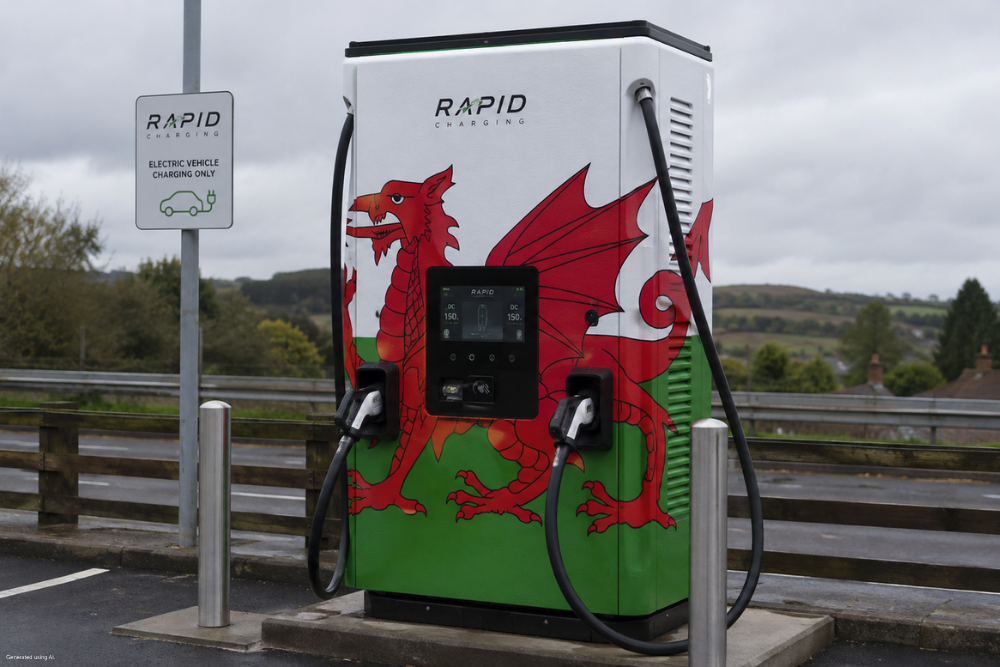
Wales has taken another step towards strengthening its electric vehicle charging network, announcing full non-domestic rates relief for EV charging bays and forecourts across the country until 2036.
The Welsh Government says the move is designed to remove a potential barrier to investment and give charging operators greater certainty as the country continues to expand its public charging infrastructure.
For businesses and fleets considering the switch to electric, the announcement is another positive sign that the supporting infrastructure is becoming a long-term priority.
A decade of rates relief for EV charging
Under the new plans, electric vehicle charging bays and forecourts in Wales will benefit from 100% non-domestic rates relief.
For the current financial year, local authorities will be asked to provide the relief using their discretionary powers. Where applicable, this could allow relief to be backdated to the beginning of the 2024/25 financial year.
The Welsh Government also plans to introduce regulations later this year that would put the relief on a statutory footing from 2027/28 through to 2035/36. This will be subject to approval by the Senedd.
The intention is straightforward: reduce the operating costs and uncertainty associated with charging infrastructure, making it more attractive for businesses to invest in new sites and expand existing networks.
Why charging infrastructure matters
The transition to electric vehicles is not simply about making more EVs available. Drivers also need confidence that they can charge conveniently, wherever their journeys take them.
That is particularly important for businesses running electric cars and vans.
For fleet operators, reliable public charging can provide an important safety net alongside workplace and home charging. It can also make electrification more practical for employees who do not have access to off-street parking or a dedicated home charger.
The Welsh Government says the relief is intended to support charging provision particularly in areas that are currently underserved.
Finance Minister Elin Jones said the transition to electric vehicles would only work if drivers could rely on the infrastructure needed to support it.
What does this mean for EV drivers?
The relief does not provide a direct financial benefit to drivers. Instead, it supports the businesses operating charging infrastructure.
However, the longer-term impact could be significant.
By reducing the costs associated with running charging sites, the policy could encourage operators to invest in additional locations, improve coverage and develop infrastructure in areas where charging provision has historically been harder to justify commercially.
That matters because charging availability remains an important consideration for anyone thinking about switching to an EV.
More chargers, better geographic coverage and greater choice between charging operators should ultimately make electric driving easier and more convenient.
A boost for businesses and fleet electrification
For businesses, the announcement is particularly relevant as more company cars and commercial vehicles transition to electric.
Fleet electrification works best when businesses can plan with confidence. That means having access to suitable vehicles, affordable charging and an infrastructure network capable of supporting drivers beyond the workplace.
The Welsh Government's long-term commitment could therefore help create a more favourable environment for organisations looking to electrify their fleets.
It also sends a wider signal to the charging industry: investment in EV infrastructure is expected to remain an important part of Wales' transport strategy for years to come.
What happens next?
For the immediate future, local authorities will administer the relief using their discretionary powers.
The planned legislation will then provide a longer-term statutory framework from 2027/28 to 2035/36, subject to Senedd approval.
For charging operators, that longer-term certainty could make it easier to assess the viability of new sites and plan future investment.
For businesses considering electric fleets, it is another indication that the infrastructure supporting the transition is continuing to develop.