

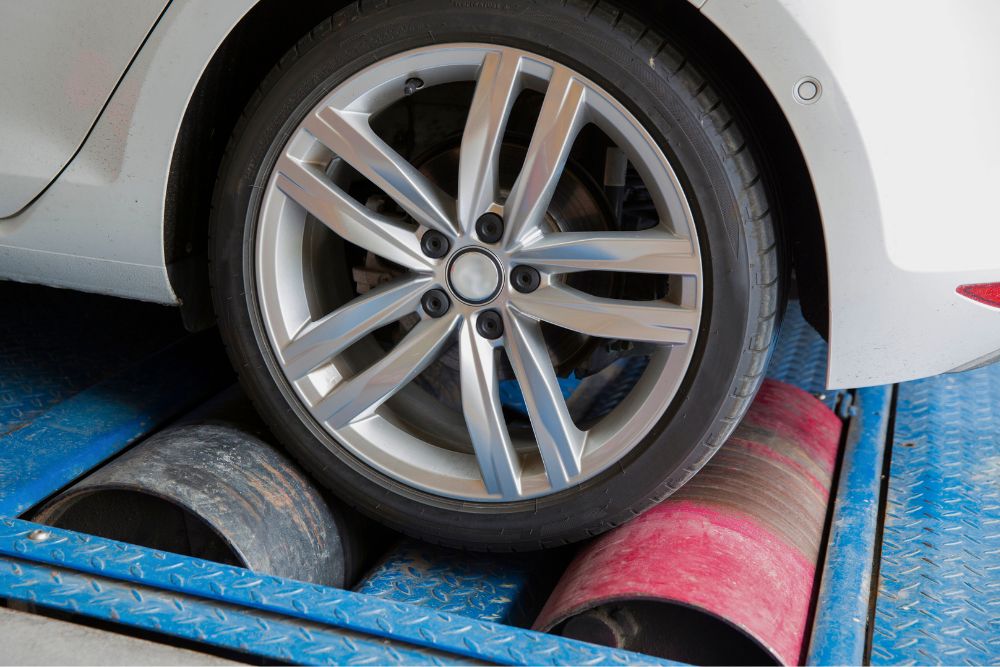
Focusing on assessing emissions, driving range, and fuel efficiency of new cars. Introduced in September 2017 by the United Nations Economic Commission for Europe, it has become the benchmark test for determining the range of electric car batteries.
Replacing the outdated New European Driving Cycle (NEDC) from the 1980s, the WLTP aims to offer more realistic data. The WLTP has improved upon the NEDC by extending the test cycle to 30 minutes, doubling the distance (to 14.4miles) and driving phases, incorporating a better urban-to-non-urban driving balance, and testing at higher speeds and more realistic temperatures (14-23 degrees). Tests are repeated multiple times to generate an average result. This enhanced testing approach provides a more accurate reflection of a car's range.
Despite its standardised approach WLTP is still a laboratory test that can not fully account for individual driving styles, traffic conditions and weather variations, all of which can significantly impact range. The same is true for ICE vehicles, where miles per gallon performance differs from the WLTP figures.
Drivers can optimize their electric car's range by adopting efficient driving habits, such as switching to eco/range mode and turning on regenerative braking . Speed also plays a crucial role in range preservation, with gradual acceleration and avoiding high speeds being key factors in maximizing efficiency.
All manufactures disclose (usually in the small print) that the range advertised is achieved during the Worldwide Harmonized Light Vehicle Test Procedure (WLTP). With many sharing that the actual range achieved under real conditions will vary.
To address the difference in results, motoring publications often conduct their own real-world driving tests to provide ‘Real World’ estimations for their readers. Many suggest considering a deviation of up to 20% from the WLTP figures.
How does this affect you?
If you're looking for a new car, WLTP is likely to play a role in your decision.
WLTP tests the emissions, driving range, and fuel efficiency of new cars, impacting Vehicle Excise Duty (road/car tax) and Company Car Tax (Benefit in Kind). The amount you pay is based on your vehicle's cost and CO2 emissions.
Switching to an electric car leads to lower rates compared to PHEV or ICE vehicles. For businesses, opting for an an electric car for your business can result in higher corporation tax relief.
More information about Vehicle Exercise Duty and BIK can be found in our guides: