

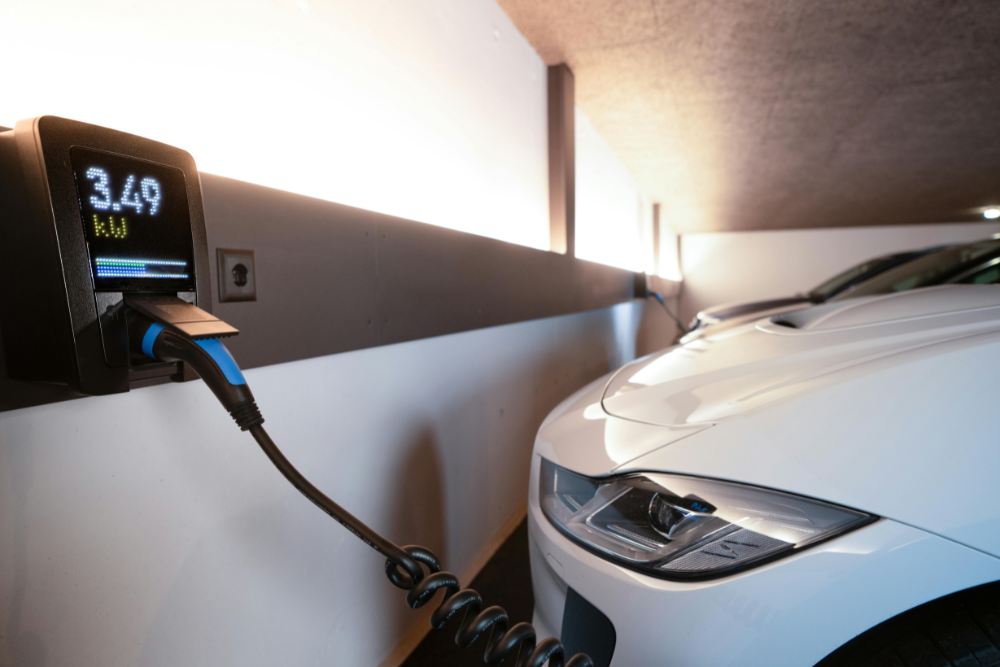
One of the most common questions surrounding electric vehicles is, “How long does it take to charge an EV?” For those yet to make the switch, the idea of regular charging sessions,especially when compared to the speed of filling up at a petrol statio, can seem inconvenient.
The reality is that there’s no one-size-fits-all answer. Charging times vary, however, once you understand the basics, it becomes easy to estimate charging times and factor them seamlessly into your everyday routine.
How long will it take to charge my EV?
Your charging time will depend on several factors including:
- Size of Battery (Battery Capacity) measured in kWh, the larger your EVs battery, the longer it might take to charge, as larger batteries tend to provide a higher electric range.
- State of battery (empty or half full etc.) if you are charging from empty, it will take longer to charge than it would if you were topping up.
- Maximum Charging Rate of your EV: You can only charge a vehicle’s battery at the maximum charge rate the vehicle can accept. If your vehicle’s max charge rate is 50kW, your EV will not charge any faster by using a 200kW chargepoint.
- Max charging rate of charge point: The time it takes to charge is also limited by the max charging rate of the chargepoint you are using. Even if your vehicle can charge at 200kW, it will only charge at 50kW on a 50kW chargepoint.
Using this calculation will give you an estimated charging time (0-100%) = Battery Capacity (kWh) / Charging Speed (kW).
What are the different types of EV chargers?
Depending on if you are topping up enroute, at the end of a ‘leg’ during a trip / when you arrive at your main destination for the day, there are several types of chargers available to EV drivers.
|
Slow charger (AC) |
Slow chargers typically perform at 3kW. This is associated with charging via a 3-pin plug |
|
Fast Charger (AC) |
The most common type of charger provides speeds between 7kW and 22 kW AC. These are mostly home charge points but also can be found at public charging networks in areas where drivers will leave their car for a significant amount of time, such as a shopping centre. |
|
Rapid Charger (DC)* |
Are typically capable of charging at 50kW-100 kW. These charging stations are often located at service stations. |
|
Ultra Rapid Charger (DC)* |
These types of chargers are even faster than rapid chargers, most are rated at a minimum of 100 kW, with some providing up to 350 kW. |
Average UK Charging Times
While the average electric car on the road today has a battery capacity of around 60–70kWh, EV battery sizes vary significantly depending on the size of the vehicle, as well as the make and model. The examples below represent typical mid-range battery sizes for small, mid-size, and large EVs. For context, the smallest fully electric cars have batteries of around 30kWh, while some of the largest electric vehicles are equipped with batteries exceeding 100kWh.
How long will it take to charge my EV from 0-100%?
|
Charger Type |
Small EV |
Mid-Size |
Large |
|
Slow charger 3kW |
13 Hours 18 Minutes |
23 Hours 18 Minutes |
30 Hours |
|
Fast Charger 7kW |
5 Hours 30 Minutes |
10 Hours |
13 Hours |
|
Rapid Charger 50kW |
48 Minutes |
1 Hour 24 Minutes |
1 Hour 48 Minutes |
|
Ultra Rapid Charger 150kW |
16 Minutes |
28 Minutes |
36 Minutes |
Although some charging times may appear long, most charging is done as a top-up. When charging en route, overnight, or at your destination, drivers typically charge from 20–80%, not 0–100%.
20% - 80% EV Charging Example
Manufacturers recommend keeping an EV charged between 20–80%, as this helps maintain battery health. In everyday use, charging is typically done as a top-up, overnight at home or a hotel, during a short stop at motorway services, or while parked at destinations such as shopping centres or attractions. As a result, it is very rare to charge an EV from 0–100%.
How long does it take to charge from 20–80% in an EV?
In 2025, Lease Electric customers frequently chose the Polestar 4 through Salary Sacrifice, making it a representative example to demonstrate typical 20–80% charging times.
Polestar 4 100kWh Long Range Dual Motor Prime
- Range = 367miles (WLTP)
- Battery Capcity = 100kWh
- Max Charging Rate= 200kW
This example, shows a 20% 80% charge (60%), topping up mileage by around 220 miles, to approximately 293 miles.
|
Charger Type |
Polestar 4 |
|
Slow charger 3kW |
20 Hours |
|
Fast Charger 7kW |
8.5 Hours |
|
Rapid Charger 50kW |
1 Hour 20 Minutes |
|
Ultra Rapid Charger |
24 Minutes |
|
Ultra Rapid Charger |
10 Minutes |
Find out more about the 20%-80% EV Charging Recommnedations, by clicking here.
How long does it take to charge an Electric Van?
Charging times for electric vans are calculated in exactly the same way as for electric cars. One of our most popular fully electric vans is the Volkswagen ID. Buzz Cargo Commerce, which we’ll use as an example below.
- Range = 276 Miles (WLTP)
- Battery Capcity = 84kWh
- Max Charging Rate = 185kW
Estimated Charging Times:
|
Charger Type |
0-100% |
20-80% |
|
Slow charger 3kW |
28 Hours |
16 Hours 48 Minutes |
|
Fast Charger 7kW |
12 Hours |
7 Hours 12 Minutes |
|
Rapid Charger 50kW |
1 Hour 40 Minutes |
1 Hour |
|
Ultra Rapid Charger |
34 Minutes | 20 Minutes |
|
Ultra Rapid Charger |
27 Minutes | 17 Minutes |
Where can I find out how long an EV will take to charge?
On the Lease Electric website, charging information can be found under 'Technical Data' 'Electric Vehicle Data' all manufacturers will provide this information, on their websites.
How do I know what speed the EV Charger will charge at?
Charging points clearly display their maximum charging speed on the unit itself. Apps such as Zapmap provide valuable information ahead of arrival, including charger availability, power ratings, recent usage, and user feedback, helping you plan your journey.
While advertised charging speeds represent optimal conditions, real-world speeds can vary. Factors such as shared power across multiple vehicles, site demand, and local grid limitations may mean your vehicle charges at a lower rate than the maximum shown. Once connected, the charger’s screen will display the actual charging speed your vehicle is receiving in real time.
Useful Links
Lease Electric's Home Charging Guide
Lease Electric's Public Charging Guide
How much does it cost to charge an EV?