

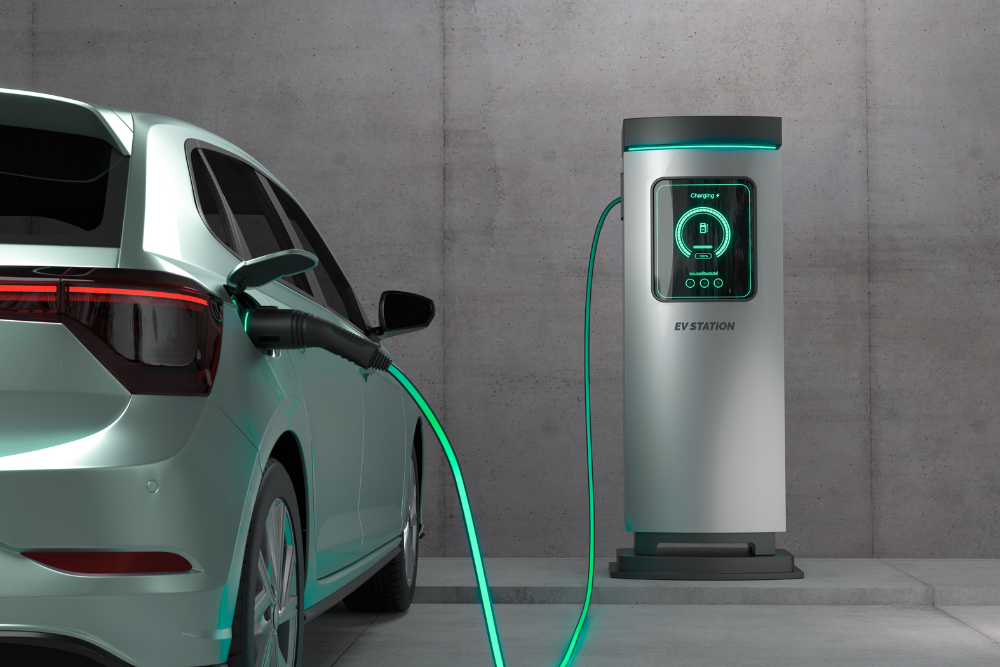
If you're considering an electric car or van but aren’t sure where to start, whether it’s questions about range, charging, practicality, costs, or all the usual factors that come with choosing a vehicle, you’re not alone.
Since the Ford Model T was introduced in 1908, drivers worldwide hae become accustomed to Internal Combustion Engines (ICE).
At Lease Electric, we recognise that transitioning to an electric vehicle can seem overwhelming. The switch to electric brings a few new considerations, and that’s exactly why the Lease Electric team has created this guide. We’ve pulled together answers to 70 of our most frequently asked EV questions to give you a clear, practical overview of owning, driving, charging and maintaining an electric vehicle.
Contents: About Electric Vehicles | How to Choose the right EV | Driving an EV | Charging an EV |EV Safety and Reliability | Whole Life Costs | Benefits of an EV
About Electric Vehicles
What is an Electric Vehicle (EV)?
An Electric Vehicle, is powered by electricity stored in a battery. This electricity powers the vehicles motors. Unlike the petrol or diesel used to power an engine.
What is the difference between BEV, PHEV and Mild Hybrid?
BEV stands for Battery Electric Vehicle, these vehicles are fully electric.
PHEV means Plug-in Hybrid Vehicle, these vehicles have an electric battery powering a motor , and a petrol engine
Mild Hybrid is a Petrol or Diesel Vehicle supported by a small electric battery - these vehicles can not drive on electric power alone.
What is WLTP and why does it matter?
WLTP (Worldwide Harmonised Light Vehicle Test Procedure) is the official test used to measure a vehicle’s electric range and efficiency under standardised conditions.
What is the difference between kW (kilowatt) and kWh (kilowatt hour)?
-
kW (kilowatt): Power output (like engine horsepower).
-
kWh (kilowatt hour): Battery capacity (like fuel tank size).
Read our full EV Terminology Guide
How do electric vehicles work?
Unlike petrol and diesel engines, that burn fuel to create power through combustion, electric vehicles use electricity stored in a battery to drive an electric motor. When you press the accelerator, energy flows directly from the battery to the motor, turning the wheels instantly.
What EVs are currently available in the UK?
Almost every mainstream manufacturer now offers fully electric vehicles. The UK market includes electric hatchbacks, SUVs and saloons across a wide range of budgets. Whether you need a practical seven-seater or something more lifestyle-focused like a convertible, there’s an EV to suit you. From established brands such as Ford and Volkswagen to newer entrants to the UK market like BYD, Geely and XPeng, electric choice has never been broader.
At Lease Electric, we work with all mainstream UK manufacturers:
How long have EVs been around?
Electric vehicles have actually been around far longer than most people realise.
The first electric cars were developed in the early 1800s and were popular before petrol cars became dominant. Modern EVs began to re-emerge in the late 1990s, with rapid advancements in battery technology over the past decade driving the growth we see today.
Are EVs better for the environment?
Yes. Electric vehicles produce zero tailpipe emissions, meaning they are lowering pollutants such as nitrogen oxides and particulate matter key contributors to respiratory and cardiovascular health issues. While EV manufacturing and battery production do generate emissions, they typically produce 60–70% lower lifecycle CO₂ emissions over their full lifecycle compared to petrol or diesel vehicles.
The UK already generates a significant and growing share of its electricity from renewable sources, further reducing EV running emissions. At the same time, manufacturers are improving sustainability by using recycled materials, increasing energy efficiency in production lines, and investing in cleaner, lower-carbon factories.
The shift towards electric vehicles is seen as a significant step in the right direction, but many have concerns over the sustainability of EVs.
Will petrol and diesel cars be banned in the UK?
The UK Government has confirmed that the sale of new petrol and diesel cars will end in 2030, with plug-in hybrid vehicles permitted until 2035. From that point onwards, all new cars sold must be zero-emission models.
However, there is no ban on driving or owning existing petrol or diesel vehicles. Drivers will still be able to buy, sell and use them for the foreseeable future. That said, it is widely expected that traditional fuel vehicles will face increasing taxation and fuel costs over time.
The transition to a fully electric vehicle fleet will take many years. As of early 2026, there are over 1.85 million fully electric cars on UK roads representing around 5.4% of the approximately 34 million cars currently in use. This highlights that while EV adoption is growing, petrol and diesel vehicles will remain part of the UK’s vehicle mix for some time.
How to Choose the Right EV
How do I choose the right electric vehicle?
You should still consider the usual factors:
- How much space you need
- Preferred body style (SUV, hatchback, saloon)
- Brand preference
- What you currently drive
- Number of seats required
- Budget
However, moving to electric adds a few additional considerations:
- Your annual mileage
- Your typical daily driving distance
- Your longest regular journey
- Whether you mainly drive motorway or urban miles
- Whether the vehicle is parked at home overnight (for home charging)
- Whether workplace charging is available
Answering these questions allows Lease Electric's EV Leasing Consultants to recommend the most suitable vehicles for your lifestyle.
Which EV brands are most popular in the UK?
According to the latest data from the Society of Motor Manufacturers and Traders (SMMT), the most popular EVs in 2025 were:
- Tesla Model Y
- Tesla Model 3
- Audi Q4 e-tron
- Audi Q6 e-tron
- Ford Explorer
- BMW i4
- Skoda Enyaq
- Kia EV3
- Skoda Elroq
- Volvo EX30
What are the Lease Electric brand favourites?
At Lease Electric, we work with all major manufacturers and regularly test the latest electric vehicles across the market. We also host our own EV showcase event, Go Electric Gloucestershire, giving customers the opportunity to explore and experience electric driving first-hand.
Our team currently drive:
Last year, our customer favourites included:
This hands-on experience allows us to give real-world, practical advice, when helping customers choose the right EV.
What body shape should I choose?
In the UK, the main car body styles are:
- Convertible
- Coupé
- Hatchback
- Saloon
- Estate
- SUV
- MPV
You’ll also see pick-up trucks, minibuses and vans, but these are considered commercial vehicles. .
The right body shape depends on your lifestyle. Ask yourself:
- How many seats do I need?
- How much space do I need?
- Is accessibility important?
- Where do I mainly drive?
Match the car to how you actually use it, not just how it looks.
How much space do I need?
Only you can decide how much space is right for you. Consider both passenger comfort and boot capacity. Do you need seven seats? Are your passengers adults or young children? Will you be fitting baby seats now and toddler seats later? Do you regularly carry luggage, sports kit, work equipment or even dog crates in the boot?
Thinking ahead will help ensure your vehicle suits you for the full length of your lease.
How much range do I really need?
One of the most common concerns we hear is “Will I have enough range?”
In reality, most UK car journeys are under 100 miles. Many modern EVs comfortably achieve 250–350 miles of real-world range, with newer models continuing to improve.
Upcoming models such as the BMW iX3, Mercedes CLA and Volvo EX60 are pushing close to the 500-mile WLTP range mark.
For many drivers, this means you could complete an entire week of driving before needing to recharge.
To work our how much range you need,
- Your annual mileage
- Your typical daily driving distance
- Your longest regular journey
- Whether you mainly drive motorway or urban miles
- Whether the vehicle is parked at home overnight (for home charging)
- Whether workplace charging is available
Answering these questions allows Lease Electric's EV Leasing Consultants to recommend the most suitable vehicles for your lifestyle.
Should I lease or buy an EV?
Whether you should lease or buy an EV depends on your circumstances, but leasing is often a popular option for people trying an electric car for the first time. Leasing typically requires little or no upfront payment and offers predictable monthly costs, with the added benefit that the leasing company takes on the risk of depreciation. It also allows drivers to upgrade to newer models every few years as EV technology continues to improve
For businesses, the decision to lease or buy an EV will depend on financial priorities, tax considerations and fleet strategy. Leasing is often attractive because it requires little upfront capital, offers predictable monthly costs and can include maintenance, while allowing businesses to upgrade vehicles regularly as technology improves. In the UK, companies can also benefit from the lease rental restriction rules, where 100% of the lease payments for fully electric vehicles can usually be offset against taxable profits, as EVs have zero CO₂ emissions. Buying an EV involves a higher upfront investment but provides full ownership of the asset and may allow businesses to claim 100% first-year capital allowances, which can make purchasing attractive for some organisations depending on their tax position.
For businesses upgrading their fleet, it is important to discuss options with you Financial Advisor / Accountant.
Tax Relief for Businesses - EVs
Driving an EV
Are all EVs automatic?
Yes, all EVs are automatic. Often refered to as 'Stop' 'Go' pedals, EVs are consider much easier to drive.
What’s different about driving an electric vehicle?
How far can I realistically drive in an EV?
How far you can drive an EV depends on the make and model of the vehicle, as well as driving conditions and driving style. Similar to petrol and diesel cars, where the advertised miles per gallon are achieved under optimal test conditions,official WLTP range figures are based on standardised testing and may be slightly higher than what drivers experience in everyday use. Factors such as motorway speeds, colder weather, use of heating or air conditioning, terrain and traffic conditions can all affect the range.
Driving style also plays an important role. Drivers who accelerate quickly or regularly drive at higher speeds may see 10–20% less range than the official figure, while smoother acceleration, steady speeds and more efficient driving can help maximise range and, in some cases, allow drivers to achieve results closer to or even exceeding the stated range.
Can I take an EV abroad?
Yes. UK motorists taking their vehicle abroad must have the original Vehicle Registration Document - V5 (photocopies are not acceptable).
If the vehicle is leased, the V5 is held by the finance company for leased vehicles, you'll need a ‘Vehicle on Hire Certificate’ (VE103B), which serves as an alternative to the V5.
How do EVs perform on motorways?
EVs perform very well on motorways and are well suited to long-distance driving. However, like petrol and diesel vehicles, motorway driving can reduce efficiency. Sustained higher speeds increase energy use, so EV range may be lower than official WLTP figures during long motorway trips. Many drivers find that range can drop compared with city driving, where regenerative braking helps recover energy.
Do EVs lose range in winter?
It is true, EV batteries, experience a reduction in range during colder weather. A 2020 study conducted in Norway, Europe's biggest EV Market, revealed that EVs can lose up to 20% of their range at temperatures between 0 and 2 degrees Celsius.
Winter driving tips to maximise range
What is regenerative braking?
Regenerative braking is a system in electric vehicles that recovers energy when the car slows down. When you lift your foot off the accelerator or press the brake, the electric motor acts as a generator, slowing the car and sending energy back to the battery. This improves efficiency and reduces brake wear.
Regenerative Breaking Quick Guide
Charging an EV
How do you charge an electric vehicle?
Depending on the charger type, it will either have a tethered cable attached or a socket where you plug in your own cable.
For home charging, simply connect the cable and activate the session via your charger app or vehicle settings. For public charging, follow the on-screen instructions and start the charge using an RFID card, contactless debit/credit card, or the provider’s app.
What is the difference between AC and DC charging?
This references both Alternating and Direct Currents. An Alternating Current is a type of electricity flow that can charge electric vehicles at slower speeds. You’ll find AC on home charging wall boxes. Direct Current is a type of electricity flow that can charge electric vehicles at faster speeds.
What is maximum charge rate?
You can only charge a vehicle’s battery at the maximum charge rate the vehicle can accept. If your vehicle’s max charge rate is 50kW, your EV will not charge any faster by using a 200kW chargepoint.
How long does it take to charge - Quick Guide
How fast will an EV charge?
Your charging time will depend on several factors including:
- Size of Battery (Battery Capacity) measured in kWh, the larger your EVs battery, the longer it might take to charge, as larger batteries tend to provide a higher electric range.
- State of battery (empty or half full etc.) if you are charging from empty, it will take longer to charge than it would if you were topping up.
- Maximum Charging Rate of your EV: You can only charge a vehicle’s battery at the maximum charge rate the vehicle can accept. If your vehicle’s max charge rate is 50kW, your EV will not charge any faster by using a 200kW chargepoint.
- Max charging rate of charge point: The time it takes to charge is also limited by the max charging rate of the chargepoint you are using. Even if your vehicle can charge at 200kW, it will only charge at 50kW on a 50kW chargepoint.
Using this calculation will give you an estimated charging time (0-100%) = Battery Capacity (kWh) / Charging Speed (kW).
How easy is it to charge at home?
Charging at home is simple and convenient. If you have a home charge point (wallbox), it will either be tethered (with a built-in cable) or untethered (with a socket where you use your own cable). Simply plug your EV in to start charging.
Some chargers begin automatically, while others require confirmation via an app or through the vehicle itself. Many drivers schedule charging during off-peak hours to reduce electricity costs, depending on their tariff. With a dedicated home charger, charging will stop automatically once the battery is full or when the chosen charing percentage had been reached.
Do I need a home wall charger?
No, you can own an EV without a home charger.
With approximately 35% of UK houses holdsof the UK popualation living without off-street parking (up to 56-70% in London), you can drive an EV without a Home Charger, however Home charging is typically the most cost-effective way to charge an EV, especially when using off-peak or dedicated EV tariffs.
If home or workplace charging is not available, or you need to charge whilst travelling, we recommend Zapmap. Their app and online map provide access to thousands of UK charging locations.
Can I charge my EV from a standard 3-pin plug?
While you can charge an EV using a standard 3-pin plug, you’ll need the correct adaptor. A domestic socket charges at a maximum of around 3kW, meaning a vehicle such as an Audi Q6, with a 100kWh battery, could take over 30 hours to fully charge.
A dedicated home wall charger offers significantly faster charging speeds, along with built-in safety features designed specifically for electric vehicles.
Can EVs be charged with solar energy?
Yes. Our Home Charging Partners Pod Point's Solo 3S is compatible with solar panels, allowing you to use excess home-generated energy to charge your EV. This feature can be managed easily via the Pod Point App.
How much does a home charger cost?
At Lease Electric, we partner with Pod Point to offer reliable, future-proof home charging solutions backed by industry-leading technology and support.
Pod Point offers two 7kW home chargers, the fastest charging option for most UK homes,
- Untethered Pod Point Charger: £999
- Tethered Pod Point Charger: £1,049
Both chargers include:
- 7kW charging (ideal for overnight home charging)
- 5-year warranty
- Smart charging via the Pod Point app
- Access to Pod Drive, Subscription based charging
- Compatibility with the EDF EV Energy Tariff, helping reduce charging costs further
- Standard Installation (fitting the charger to a suitable wall, up to 15m of cabling, and 3m of trunking from the meter to the outside wall. Over 90% of homes with off-road parking qualify, and any extra work needed is quoted separately. More information is available by clicking here.)
Home Charger Installation Guide
How do you find public chargers?
Just like when you are searching for a nearby fuel station, there are a few ways to find your nearest charging point.
- Dedicated websites and apps such as ZapMap, PodPoint, GridServe or Co Charge. Zapmap shares a charging map showing available chargers, costs, supplier and payment information. They list 95% of the UKs available charging points, alongside various points available in both France and Germany.
- Using Google Maps search ‘EV chargers near me’ - whilst this isn’t as comprehensive a guide as dedicated platforms such as Zap Maps, Google Maps will show chargers that have been listed with them:
- Some EVs use their SatNav systems to flag up nearby chargers, or even factor in a charging stop for you if you are using the SatNav.
How do you use public charging stations?
Once you’re at the charger, park in the bay with your charging port close to the charging point and turn off your EV. Then follow the instructions on the charger or your chosen App. It is often as simple as:
- Tap your debit, credit or charging card, or activate charging on your app (i most cases, the provider will take a deposit of between £25 and £40 and then refund or increase the payment so that you are charged the final amount).
- Plug your EV into the charging point
- Charging begins.
Once charging begins, you can lock your EV and leave it to charge.
Are there enough chargers in the UK?
Those unfamiliar with public charging facilities may not realise how the UK's infrastructure is developing. As of the end of February 2026, there are 88,513 public charging devices, providing 116,729 EV chargers across 45,242 locations in the UK.
In comparison, the United Kingdom has just 8,349 petrol stations.
Can I charge in the rain?
Yes. EVs, along with their associated cables, adapters, and charging points, are designed to endure the diverse weather conditions we experience throughout the year.
Does rapid charging damage the battery of an EV?
EVs are designed to be charged frequently as part of normal use. While you won’t notice any immediate damage from using rapid chargers, frequent reliance on rapid charging has been shown to slightly increase the rate of battery degradation over time. To help maintain long-term battery health, many experts recommend following the 20–80% charging rule, which involves keeping the battery charge between around 20% and 80% for everyday driving.
Should I charge to 100% every time?
Many manufacturers quote charging times from 20% to 80%, as this range is considered the most efficient for lithium-ion batteries. Like those in mobile phones and laptops, EV batteries naturally degrade over time. Regularly charging between 20% and 80% can help preserve long-term battery health and optimise lifespan.
Charging to 100% is perfectly safe when needed,particularly for longer journeys, but consistently charging from 0% to 100% may gradually affect overall battery capacity.
What happens if I run out of charge?
Whilst running out of charge is uncommon, in 2025, the AA reported that just 1.85% of all EV Breakdowns are caused by running out of charge. EVs are similr to petrol / diesel vehicles and will provide plenty of warning before completely running out of charge, the dashboard and infotainment screen will alert you - EV Dashboard Symbols.
If you do run out of charge, the AA, RAC and other breakdown providers are well equipped to help, with services included in many breakdown packages to tow you to the nearest charging station.
Running out of charge - the Volkswagen ID.4 Study
EV Safety & Reliability
How safe are electric vehicles?
Electric vehicles must meet strict UK and international safety standards before they can be sold. This includes rigorous testing for electrical safety, fire protection and crash performance. Many EVs are also independently tested by organisations such as Euro NCAP, often achieving high safety ratings.
EVs are built to the same and often higher, safety standards as petrol and diesel cars. Without a traditional engine block, they benefit from larger crumple zones, and their low centre of gravity (due to batteries mounted in the floor) improves stability and reduces rollover risk.
Concerns about EV fires are understandable, but data shows they are no more common and in some countries less common, than fires in petrol or diesel vehicles. Modern EVs include advanced safety systems such as Battery Management Systems and automatic battery disconnect features in the event of a collision.
EVs are also designed to be safe in all weather conditions, including heavy rain. Charging in the rain is safe, as chargers only activate once safety checks are complete. Dedicated home chargers are weatherproof and professionally installed for added protection.
Overall, EVs are engineered with comprehensive safety systems, making them just as safe if not safer, than traditional vehicles.
How reliable are EVs compared to petrol cars?
EVs have less moving parts than petrol or diesel vehicles, they have no engine, and no gear box, meaning that there are less things to go wrong than in traditional vehicles. Latest data from the AA not only confirms that EVs are less likely to breakdown than petrol or diesel vehicles, but that they also are much more likely to be repaired roadside, than petrol or diesel cars.
Should your EV need repairing, a recent SMMT survey of aftermarket businesses found that 81.2% of UK workshops are already equipped to work on EVs.
Do EVs catch fire?
While lithium-ion batteries, the most widely used type in electric vehicles, can present a fire risk, evidence does not support the idea that EV fires happen more frequently than those involving petrol or diesel vehicles. In fact, studies show that fires in electric vehicles are less common than in traditional vehicles.
Myth Busted: EVs Regulalry Catch Fire
What does EV battery warranty cover?
An EV battery warranty covers the high-voltage battery pack against manufacturing defects and excessive degradation for a set period, typically around 8 years or 100,000 miles. During this time, manufacturers guarantee that the battery will continue to function properly and usually retain at least around 70% of its original capacity. If the battery fails due to a defect or its capacity drops below the guaranteed threshold within the warranty period, the manufacturer will normally repair or replace the battery or affected components, such as battery modules or the battery management system. However, the warranty generally does not cover damage caused by accidents, misuse, or unauthorised modifications.
How long do EV batteries last?
Most electric vehicle batteries come with warranties of around 8 years or 100,000 miles, although they are expected to last significantly longer. EV manufacturers almost uniformly offer battery warranties of this length. Batteries are typically guaranteed to retain at least 70% of their original capacity during this period. You will find many examples of EVs exceeding 100,000 miles. For example, a Tesla Model S used as an airport taxi in the UK accumulated over 430,000 miles while still running on its original battery and motors, demonstrating the potential longevity of EV batteries.
Once an EV battery can no longer power an EV, they are already being repurposed for powering homes or commercial buildings, as well as for energy storage in the electricity grid, with the best example being Rome's Fiumicino Airport. Some manufacturers, such as Volkswagen, are also experimenting with new recycling methods resulting in raw materials being recycled and used to create new car batteries.
Are EVs safe in accidents?
Electric vehicles (EVs) are constructed to meet the same safety standards as internal combustion engine (ICE) cars, making them equally safe in collisions. In accidents, EVs often provide better protection to occupants than traditional models due to their design and safety features.
Whole Life Costs
Are EVs more expensive than petrol or diesel cars?
Electric vehicles can sometimes be more expensive upfront, but the price gap with petrol and diesel cars is continuing to close as EV price parity improves.
When leasing, businesses and drivers can often access better discounts and special offers on EVs, as manufacturers have annual targets for electric vehicle sales. Combined with lower running costs, reduced maintenance, and tax incentives, EVs can often offer a comparable or lower total cost of ownership over time.
How much does it cost to charge an EV in the UK?
In 2026, charging at home costs average 8p per mile while a diesel or petrol vehicle can cost around 13p to 17p per mile to fuel. Some suppliers continue to offer tariffs enabling drivers to charge their EVs at under 3p per mile (EDF Energy, GoElectric Overnight with Pod Point = 8.49p per kWh | Good Energy EV Tarrif 6.6p per kWh) .
On average, Zapmap charging data shows that the cost of charging an EV on the public network is roughly equivalent to fuelling an equivalent petrol car.
How much tax will I pay for an electric vehicle?
The first-year VED rate is based on the vehicle’s CO₂ emissions when first registered. Zero-emission vehicles pay £10, while petrol and diesel vehicles pay higher rates depending on their emissions. From the second year onwards, cars typically move to the standard annual rate (currently £200 per year for cars). This means the biggest VED difference is often seen in the first-year rate when comparing electric vs petrol/diesel.
2026 Car Tax Changes and Incentives
What is the expensive Car Supplement, and do EVs pay it?
Under the Expensive Car Supplement, any car that costs more than £40,000 when new incurs an additional annual fee for five years, starting from the first VED payment. EVs can also be liable for this supplement. However, the Government announced additional support by increasing the threshold for electric cars from £40,000 to £50,000.
For 2026//27 Tax Year, this rate is set at £460.
2026 Car Tax Changes and Incentives
What are Benefit-in-Kind rates for company car drivers?
Benefit-in-Kind (BiK) tax applies to company cars because they are classed as a non-cash benefit. The amount you pay depends on the vehicle’s P11D value (list price including VAT and options), its CO₂ emissions, and your income tax band (20%, 40% or 45%).
The calculation is: P11D value × BiK percentage × your tax rate.
Fully electric vehicles benefit from significantly lower rates, for the 2026/27 tax year, the BiK rate for fully electric cars is 4%, making them one of the most tax-efficient company car options available.
Benefit-in-Kind Rates 2020-2030
How much are EV tyres?
Like all tyres cost depends on size and brand. EV Tyres range from £130 - £300 with the average cost being £207 per tyre.
EV tyres are more expensive due to higher specifications, but using regular car tyres on an electric vehicle is not recommended and is likely to lead to more frequent replacements.
Although EV tyres have a higher initial cost, they are more cost-efficient over time. Their lifespan varies based on driving frequency and journey distances. Regular maintenance can also help extend their lifespan.
However, if you choose to lease your next EV, you can opt to include a maintenance package, which covers th cost of tyre replacement or repair. With Salary Sacrifice, this is included as standard.
Maintenance - What are the benefits?
How much does an EV service cost?
EV servicing is generally less expensive because electric cars have fewer moving parts and don’t need things like oil changes or spark plugs, most EV owners in the UK can expect to pay around £100–£250 per year for servicing.
However, if you choose to lease your next EV, you can opt to include a maintenance package, which covers the cost of routine servicing. With Salary Sacrifice, this is included as standard.
Maintenance - What are the benefits?
What is checked during an EV service?
During an EV service, technicians typically check the following:
- Battery and Charging System
- Cable and Connector
- Cooling System
- Pollen Filet Replacement
- Power Steering
- Steering and Suspension
- Wheels and tyres
- Brakes
- Front and Rear Lights
- Mechnaical Parts
- Wipers & Wiper Fluid
- Horn
- Seatbelts
Is insurance more expensive for electric cars?
Electric car insurance can sometimes be more expensive because EVs often cost more to buy than conventional petrol or diesel vehicles. They are also fitted with advanced technology and specialised components, such as high-voltage batteries and driver-assistance systems, which can be more expensive to repair or replace. In addition, if an EV is involved in an accident, it may need to be repaired by specialist technicians or approved repair centres, which can increase repair costs.
With Lease Electric's EV Salary Sacrifice Scheme, Comphrensive Insurance is included.
What is the charging cost per mile of an EV?
Even with fluctuating energy and fuel prices, EVs remain significantly cheaper to run per mile when charged at home. In 2026, the average home charging cost is around 8p per mile, compared to roughly 13–17p per mile for petrol or diesel.
Some specialist EV tariffs can reduce this even further, with off-peak rates bringing costs down to just a few pence per mile.
Public rapid charging is more expensive and can be similar to petrol costs, but for drivers who primarily charge at home, EVs typically deliver substantial day-to-day fuel savings compared to traditional combustion vehicles.
Do EVs hold their value?
Depreciation is a hidden cost of owning a car. The old saying that “a car loses value as soon as you drive it off the forecourt” is largely true. Most vehicles start to depreciate immediately after purchase, unless they are limited-edition, highly sought-after, or classic models that have already depreciated and begun to increase in value again. Electric cars are no different. While some models, such as the Porsche Taycan, hold their value relatively well, retaining around 55–77% after three years or roughly 36,000 miles, EVs overall tend to depreciate faster. On average, electric cars retain around 39% of their original value, compared with about 52–56% for petrol, diesel and hybrid vehicles over the same period.
Are EV salary sacrifice schemes worth it?
EV Salary Sacrifice allows employees to lease an electric vehicle through their employer using part of their gross salary, with payments taken before tax and National Insurance, making it a highly cost-effective option. It typically includes insurance, servicing, maintenance and road tax in one fixed monthly payment. Popular with employees who receive a car allowance or don’t have a company car, salary sacrifice often provides greater choice and tax efficiency, delivering a brand-new, fully maintained and insured EV at a lower cost than leasing privately.
From 2026, Lease Electric advise Salary Sacrifice Customers to consider a 3 year lease, due to uncertainties around Benefit-in-Kind from 2030.
How does Electric Vehicle Tax (3p per mile) compare to fuel duty?
From 2028, a proposed 3p-per-mile Electric Vehicle Excise Duty (eVED) but Even with potential future eVED charges, EVs are likely to remain significantly cheaper from a taxation perspective than petrol or diesel alternatives.
The table below shows estimated 2028 fuel taxes for the Volkswagen ID.4 and Volkswagen Tiguan. In the UK, the average annual mileage is 7,100, but we’ve based our comparison on 10,000 miles, as this reflects the mileage used in many Lease Electric customer leases.
| Vehicle | Mileage Based Charge (eVED) | Fuel Duty | Annual Total Tax (Fuel Only) |
|---|---|---|---|
| Electric Volkswagen ID.4 Pro, Black Edition |
£300 | £0 | £300 |
| Plug-in Hybrid (PHEV) Tiguan R Line 1.5 TSI e-Hybrid 62 mile Electric range 172.3mpg 37 g/km |
£150 | £153.14 | £303.14 |
| Petrol Tiguan R Line 1.5 eTSI 45.6mpg 141 g/km CO2 |
£0 | £577.65 | £577.65 |
| Diesel Tiguan R Line 2.0 TDI 50.9mpg 146 g/km |
£0 | £517.50 |
£517.50 |
eVED vs Fuel Duty - Comparison Continued
Benefits of Driving an EV
What are the environmental benefits of driving an EV?
Driving an electric vehicle (EV) can offer several environmental benefits compared with petrol or diesel cars:
- Zero tailpipe emissions
- Lower lifetime greenhouse gas emissions
- Improved air quality
- Greater energy efficiency
- Supports climate goals
What are the tax benefits of driving an EV?
Electric vehicles (EVs) offer a range of tax advantages for both businesses and individuals in the UK.
In recent years, the UK Government has introduced several incentives to encourage the adoption of ultra-low emission vehicles (ULEVs). While some schemes have evolved, a number of tax benefits and financial incentives are still available to support the transition to electric cars and vans.
These include low Benefit-in-Kind (BiK) rates for company car drivers, reduced first-year Vehicle Excise Duty (VED), Corporation Tax relief for businesses, and grants to help with the cost of installing charging infrastructure. Together, these incentives make switching to electric a more cost-effective option.
Car Tax Changes 2026: How Much Will Drivers & EV Owners or Businesses Pay?
Are EVs cheaper to run long term?
Yes. Electric vehicles are usually cheaper to run over time.
They benefit from lower fuel costs, reduced maintenance, and tax advantages such as low Benefit-in-Kind rates for company cars.
Do EVs require less maintenance?
Yes. Electric vehicles generally require less maintenance than petrol or diesel cars.
EVs have fewer moving parts, meaning there’s no need for oil changes, fewer brake replacements, and less overall servicing. This can help reduce maintenance costs over the lifetime of the vehicle.
Are EVs better for businesses?
Yes. Electric vehicles can offer several advantages for businesses.
They benefit from lower running costs, reduced maintenance, and favourable tax incentives, such as low Benefit-in-Kind (BiK) rates and potential Corporation Tax relief.
EVs also support corporate sustainability goals. By switching fleet vehicles to electric, businesses can reduce Scope 1 emissions (direct emissions from company-owned vehicles) and Scope 3 emissions (indirect emissions from employee travel and leased vehicles). This helps organisations lower their overall carbon footprint and make progress towards net-zero and ESG targets.
Car Tax Changes 2026: How Much Will Drivers & EV Owners or Businesses Pay?
Tax Relief for Businesses - EVs
Benefit-in-Kind (BiK) Table 2020-2030 Tax Year
How EV Salary Sacrifice Supports Business Sustainability
Lease Electric - The UK's First Climate Postive Leasing Service
What is Climate Positive Leasing?
The term 'climate positive' also referred to as 'carbon negative', means that the amount of Carbon Dioxide (CO2) and greenhouse gases (GHG) in the world are reduced as a result of an action or organisation i.e. the net effect is removing carbon dioxide from the atmosphere rather than adding it.
Every time we lease a car or van we invest in Verified Carbon Standard (VCS) and Gold Standard carbon reduction projects to compensate for the carbon created by the vehicle manufacturer. Through our partners at Ecologi, we offset more CO2e emissions than are generated through the production process of a vehicle and its battery, which on average is around 15-20 tonnes, although this can depend on the manufacturer and carbon density of the electricity network at the manufacturing plant.
We also plant 100 trees in the Lease Electric Forest. Each individual tree removes ~0.3083 tonnes of CO2e over a 25-year lifespan equating to roughly 30 tonnes of CO2 being removed from the earth's atmosphere. This is enough CO2 to cover twice the amount of carbon emissions emitted over an electric vehicle's lifetime. If you charge your electric vehicle with renewable energy then all 30 tonnes will be climate positive.
Lease Electric - The UK's First Climate Postive Leasing Service